What Are the Best Wall Panel Systems from China?
Choosing the best wall panel systems from China requires more than comparing attractive catalog photos. The right system must suit the building, climate, budget, and installation team. This guide examines manufacturers through practical evidence, including material composition, surface durability, fire performance, acoustic behavior, and connection design. We also consider production consistency, quality control, test reports, and after-sales support. A panel may look premium in a showroom yet fail under moisture, impact, or poor site preparation. That difference matters.
Reliable evaluation starts with samples and documented specifications. Buyers should request full-size panels, color cards, edge details, installation drawings, and packing photos. Factory audits can reveal whether equipment, storage, and inspection procedures match supplier claims. Independent certifications and project references add confidence, but they still require verification. Standards and fire classifications may differ between China and the destination market. Check them with qualified local professionals. Pricing deserves careful attention too. Low quotations can hide thin cores, weak accessories, higher waste, or difficult replacement terms. No supplier is perfect. Even experienced teams can miss a tolerance issue or underestimate shipping damage. This article compares leading options with a balanced view, highlighting strengths, limitations, and questions worth asking before purchase. The goal is not to promote one factory. It is to support a defensible decision based on performance, evidence, and long-term value.
What Are Wall Panel Systems and How Do They Work?
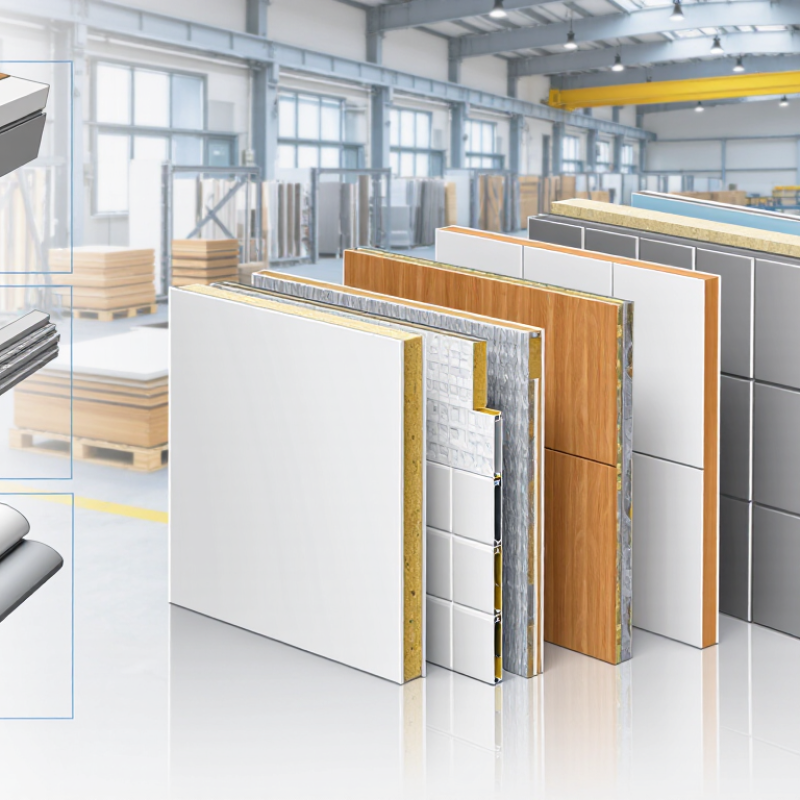
Wall panel systems are engineered layers, not merely decorative sheets. A typical system combines a surface panel, support rails or clips, insulation, and a prepared wall substrate. Panels may use fiber cement, mineral boards, aluminum, wood composites, or recycled polymers. The fixing method controls movement, ventilation, maintenance, and replacement. Adhesive installation is fast, but concealed clips usually offer better access for repairs.
The mechanism is straightforward. Rails transfer weight to the structure, while joints absorb small movements caused by temperature and humidity. Some systems create a ventilated cavity behind the panel, helping drain moisture and reduce heat gain. According to the UNEP Global Status Report for Buildings and Construction 2024, buildings consumed 32% of global energy in 2023 and produced 34% of global carbon emissions. Therefore, panel selection should consider insulation continuity, not appearance alone. Details decide performance.
In practical inspections, installers should check flatness, anchor spacing, joint width, fire classification, and water drainage. Acoustic performance also depends on the cavity, not just panel thickness. ISO 10140 test data can compare airborne sound insulation, but laboratory results may differ on site. That difference matters. A visually perfect wall can still transmit noise through weak joints. Moisture is unforgiving. Some Chinese wall panel systems offer efficient prefabrication and consistent dimensions, yet buyers should verify test reports, installation tolerances, material declarations, and local code compatibility. The cheapest specification is rarely the safest one.
Which Types of Wall Panel Systems Are Made in China?
China manufactures several wall panel systems for residential, commercial, and industrial projects. Common options include PVC and SPC decorative panels, wood-plastic composite panels, calcium silicate boards, magnesium oxide boards, aluminum honeycomb panels, and acoustic PET panels. Each type serves a different need. SPC panels resist moisture, while calcium silicate boards offer stronger fire performance. WPC panels create a warmer wood appearance, but outdoor exposure still requires careful testing.
Grand View Research has reported steady growth in the global wall panel market, driven by faster construction and demand for energy-efficient interiors. The International Energy Agency states that buildings and construction represented about 34% of global energy demand in 2022. This explains the interest in insulated sandwich panels and integrated wall systems made in China. These systems may combine a decorative surface, insulation core, and structural backing. Factory production can reduce installation time, especially for hotel rooms and modular buildings.
Material selection should not rely on appearance alone. Ask for test reports covering fire reaction, formaldehyde emissions, moisture resistance, dimensional stability, and sound absorption. The exact test standard matters. A panel passing one national standard may not satisfy another market’s code. The World Green Building Council also emphasizes embodied carbon and material transparency, yet supplier documentation is sometimes incomplete. That weakness deserves attention. A lower price may hide thinner cores, inconsistent density, or poor edge finishing. Samples should be checked under real lighting, pressed at joints, and exposed to controlled humidity before approval.
What Materials and Features Define High-Quality Wall Panels?
The best wall panel systems from China are defined by material discipline, not appearance alone. Fiber-cement panels offer strong moisture resistance and stable performance in changing temperatures. SPC panels provide a dense, waterproof surface for kitchens, bathrooms, and commercial interiors. Aluminum panels suit projects requiring light weight, clean lines, and strong impact resistance. Natural wood veneer adds warmth, but it needs careful sealing and humidity control.
A high-quality panel has a consistent core, accurate dimensions, and a reliable locking or fixing system. I usually inspect panel edges, because weak edges can reveal poor bonding. A 10-millimeter panel should remain straight after storage and installation. Small gaps often become visible under bright lighting. That detail matters. Acoustic backing can reduce reflected noise, while a tested fire-rated core improves safety in public spaces. Buyers should request test reports for fire performance, formaldehyde emissions, water absorption, and surface wear. Certificates alone are not enough; the testing scope and date deserve attention.
Installation quality also defines the final result. Concealed clips, corrosion-resistant screws, and expansion allowances help prevent buckling. Panels should arrive protected from moisture, with matching batch colors and clear installation instructions. A beautiful sample can mislead. I have seen attractive surfaces fail because the substrate was uneven or the joints were poorly planned. For dependable sourcing, compare full samples, technical data, factory quality controls, and after-sales support rather than choosing by price alone. Some projects still need custom testing, because local climate and building requirements can expose weaknesses that a showroom cannot show.
How Should Buyers Evaluate Chinese Wall Panel Suppliers?
What Are the Best Wall Panel Systems from China?
How Should Buyers Evaluate Chinese Wall Panel Suppliers?
Evaluating Chinese wall panel suppliers requires more than comparing online prices. Buyers should verify factory capability, material consistency, and quality controls. Request current product samples, technical data sheets, and test reports. Check whether the reports match the exact panel structure, surface finish, and core material.
Ask about moisture resistance, fire performance, acoustic ratings, and dimensional tolerance. Requirements vary by project and destination. A supplier should explain these differences clearly. Vague answers deserve caution. An independent inspection can review raw materials, production lines, packaging, and finished panels before shipment. Factory photos help, but physical verification is stronger.
Look closely at sample details. Examine edge alignment, coating uniformity, joint design, and protective film. A polished sample can still mislead. Production batches may differ. Request a batch sample before mass production, especially for large commercial projects. Confirm lead times, replacement procedures, packing methods, and inspection responsibilities in writing. Also review payment terms and communication speed.
Good suppliers usually provide traceable documents and realistic advice. They should admit technical limits. That matters. Some buyers focus too heavily on the lowest quotation and overlook installation waste, damaged cartons, or delayed containers. A cheaper panel may create higher project costs. No checklist is perfect. Rechecking critical details remains necessary, even after a supplier appears reliable.