How to Choose Ordinary Plywood for Global Sourcing?

Choosing Ordinary Plywood for global sourcing requires more than comparing prices on a supplier spreadsheet. Buyers must examine the panel’s structure, surface quality, moisture condition, and intended application. A low-cost sheet may contain uneven veneers, oversized core gaps, or weak bonding that becomes visible after cutting. Ask for clear details about thickness tolerance, wood species, adhesive type, formaldehyde emissions, and applicable quality standards. Small details matter.

Samples reveal what specifications cannot.

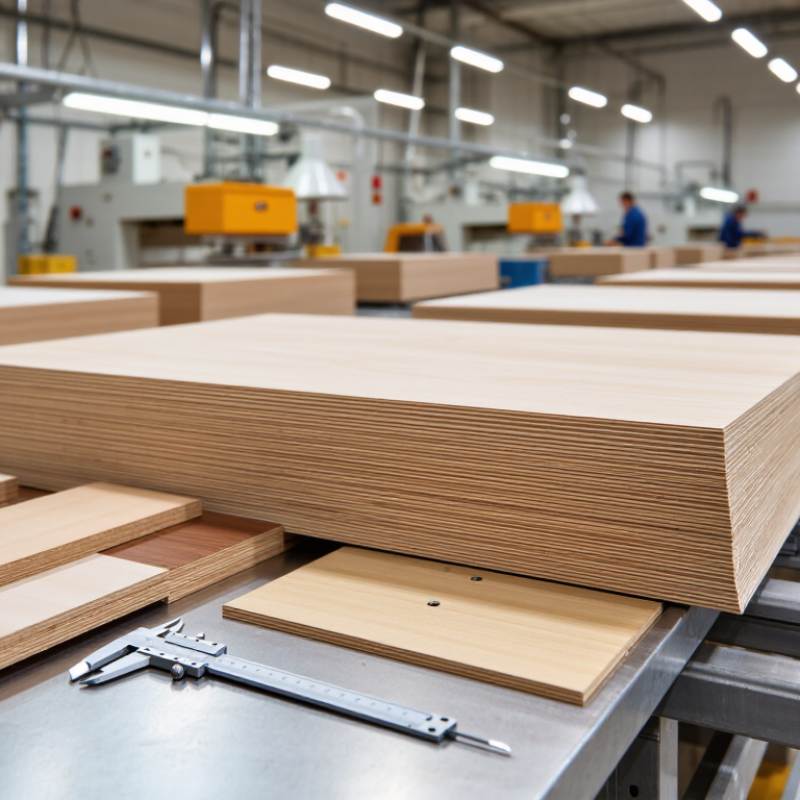
A practical evaluation should include sanding, edge inspection, screw-holding tests, and exposure to changing humidity. Measure each sample with a calibrated caliper, not only by visual inspection. Check whether the face veneer remains stable after handling and whether the panel bends during stacking. Supplier experience also deserves attention. Review factory records, production capacity, inspection procedures, and previous export performance. Independent testing can confirm essential claims, especially when shipments cross different regulatory markets. Requirements for emissions, labeling, packaging, and documentation may vary by destination, so current local rules should be verified before purchase. No checklist is flawless. I have seen attractive samples hide inconsistent core construction in later batches. For that reason, approved samples, written tolerances, and pre-shipment inspections should support every order. Reliable sourcing is not about finding the cheapest Ordinary Plywood; it is about controlling uncertainty from factory floor to final use. A carefully defined specification protects budgets, schedules, and customer trust.

How to Choose Ordinary Plywood for Global Sourcing?

Define Ordinary Plywood and Its Common Applications

Ordinary plywood is a general-purpose engineered wood panel made from thin veneer layers. Each layer is arranged with its grain direction crossing the next. Adhesive bonds these veneers under heat and pressure. This structure gives the panel better stability than solid timber.

In global sourcing, “ordinary plywood” usually describes standard construction or interior-use panels, not a specialized product. Common thicknesses include 3, 6, 9, 12, and 18 millimeters. Applications include furniture backs, packaging boxes, wall lining, shelving, temporary partitions, and concrete formwork. A 12-millimeter panel may work well for a cabinet side, but it may bend under heavy loads without proper support. Surface quality, core gaps, sanding, and formaldehyde emission class can vary greatly between suppliers. I have seen attractive faces hide weak inner layers, so appearance alone is unreliable.

Tips: Request a technical data sheet, veneer species, panel dimensions, moisture content, and adhesive information. Ask for samples from the actual production line. Inspect the cut edge for voids and uneven layers. Confirm whether the panel suits dry, humid, or outdoor conditions. Export documents should match the physical product and destination requirements. Testing against recognized standards adds confidence, although small suppliers may provide incomplete records. This is where careful review matters.

Compare Plywood Grades, Core Structures, and Surface Qualities

How to Choose Ordinary Plywood for Global Sourcing?

Ordinary plywood should be judged by grade, core structure, and surface quality. The FAO Global Forest Products Facts and Figures 2023 reported approximately 405 million cubic metres of wood-based panels produced worldwide in 2022. This scale hides major differences between suppliers. A face grade describes visible defects, not necessarily strength. A-grade veneers look cleaner, while B, C, and D grades may include knots, patches, or open defects. Always request a written grading standard.

Core construction affects stability. Full-core panels usually provide better screw holding and fewer visible gaps. Cross-banded cores can reduce warping across the panel. Mixed-species cores may lower cost, but density and drying consistency can vary. Hold the sample edge against light. Dark lines may reveal gaps. I have seen attractive faces covering weak inner layers. It is easy to miss.

Surface quality needs measurable checks. Ask for thickness tolerance, sanding condition, moisture content, and formaldehyde class. EN 322 defines wood moisture testing, while EN 314-2 classifies bonding quality for plywood use conditions. The USDA Wood Handbook notes that moisture changes drive wood movement, so storage conditions matter after arrival. A smooth face is not automatically a durable face. Check glue bleed, core telegraphing, patched knots, and edge squareness. Small samples mislead. Use multiple production samples, and record results before shipment. The weak point may be your specification.

How to Choose Ordinary Plywood for Global Sourcing? - Compare Plywood Grades, Core Structures, and Surface Qualities

Plywood Grade / Category Typical Standard or Classification Common Core Structure Surface Quality Bonding and Moisture Performance Typical Thickness Range Suitable Applications Global Sourcing Checks
Utility / Packaging Plywood
Interior or temporary use
Usually sold by appearance and thickness rather than by a high-performance structural class. Confirm the supplier's applicable national or project standard. Mixed hardwood or softwood veneers; may include more core joints, patches, and small voids. Usually an odd number of veneer layers. Rough to moderately sanded faces; open grain, color variation, knots, patches, and minor edge defects are common. Often interior-grade adhesive. Limited resistance to repeated wetting unless specifically tested. 3–18 mm is common, but availability varies by market and mill. Crating, pallets, temporary protection, shop fixtures, concrete protection, and non-decorative packaging. Request a sample, thickness tolerance, panel weight, core-void photos, moisture content, and a clear defect acceptance limit.
MR Plywood
Moisture resistant
Common trade term for “moisture-resistant” plywood. MR is not the same as waterproof or exterior-grade plywood. Veneer core or occasionally a combi-core; core quality depends strongly on the supplier specification. Usually sanded on one or both faces. Suitable for painted or laminated finishes when the face is properly graded. Intended for dry interior conditions and short-term humidity exposure. It should not be specified for continuous outdoor exposure. 3–25 mm is commonly available. Furniture components, cabinets, wall panels, shelving, doors, and interior construction in dry areas. Verify adhesive type, formaldehyde class if required, face/back grade, sanding tolerance, and whether the product is actually tested to a recognized standard.
Structural Plywood
Load-bearing use
In Europe, EN 636 classifies plywood by intended service conditions; other markets may use national structural standards. Balanced cross-laminated veneers with controlled thickness, lay-up, and core integrity. Structural panels should have limited open defects. Face appearance may be lower than furniture-grade plywood, but panel flatness, thickness, and integrity are more important. Performance depends on the specified service class and adhesive. Confirm bending strength, modulus of elasticity, and shear properties. Typically 9–30 mm for many construction and industrial uses. Roof and wall sheathing, flooring substrates, transport structures, industrial platforms, and load-bearing components. Request technical data, test reports, lay-up details, density, strength values, edge-sealing requirements, and third-party certification where required.
Exterior-Grade Plywood
Exterior exposure
Often specified by an exterior-bond classification, such as EN 636-3 for plywood intended for exterior conditions. Durable veneer species or treated veneers with a stable cross-banded construction; void control is important for outdoor durability. Faces may be smooth, patched, or utility grade. Surface appearance alone does not prove exterior performance. Uses weather-resistant bonding and is designed for exposure conditions, but edges and cut surfaces still require suitable protection. 6–30 mm is common for building and industrial panels. Outdoor signs, cladding substrates, garden structures, construction components, transport equipment, and covered exterior work. Check bond durability, species durability, edge quality, water-absorption behavior, panel flatness, and the required coating or sealing system.
Marine-Use Plywood
High durability requirement
“Marine” is a performance claim that must be linked to a recognized standard, project specification, or test method; it is not automatically a universal grade. Carefully selected, durable veneers with a low-void core and controlled lay-up. Face appearance can still vary by specification. Generally smooth and well repaired, but a decorative face is not required unless separately specified. Durable bonding and low core-void risk are essential. Waterproof bonding does not make the wood itself rot-proof. 6–25 mm is frequently specified, with thicker panels available for special projects. Boatbuilding, docks, wet-area structures, high-humidity transport components, and demanding outdoor applications. Require the exact standard, veneer species, core-void limit, glue-line test method, density, moisture content, and documentation for every shipment.
Furniture-Grade Plywood
Appearance-focused
Usually defined by face/back grades and customer specifications rather than by one universal international grade. Veneer core, combi-core, or engineered core. A multi-layer veneer core normally offers better screw holding and dimensional consistency than a low-quality mixed core. Smooth, evenly sanded face with controlled knots, patches, color, open defects, and thickness variation. A-grade faces have fewer visible repairs than lower grades. Adhesive selection depends on indoor or humid-room use. Confirm whether the panel is MR, exterior-bonded, or another defined class. 5–25 mm is common for cabinetry and interior components. Cabinets, furniture, doors, shelving, wall panels, retail displays, and painted or veneered interiors. Approve a physical reference sample and define face grade, back grade, patch color, sanding quality, edge defects, flatness, and allowable thickness tolerance.
Film-Faced / Coated Plywood
Surface-protected panel
The film, coating weight, edge sealing, and intended reuse level must be specified separately from the underlying plywood grade. Usually hardwood or mixed hardwood veneer core selected for strength, screw holding, and resistance to handling damage. Phenolic film, melamine film, paint, or another coating creates a smoother and more uniform surface. Coating defects can include bubbles, scratches, pinholes, and edge lifting. Coating improves release and surface protection but does not eliminate the need for exterior-grade bonding and sealed edges when exposure is severe. 12–21 mm is widely used for formwork and heavy-duty panels. Concrete formwork, vehicle floors, industrial platforms, reusable packaging, and high-wear surfaces. Compare film weight, coating color and texture, gloss, abrasion resistance, water resistance, edge sealing, panel flatness, and expected reuse cycles.
Low-Emission Plywood
Indoor air-quality requirement
May be specified using formaldehyde-emission requirements such as EN 717-1 classes or applicable regulations in the destination market. Core construction can be veneer, combi, or engineered core; low emissions do not automatically indicate superior structural or surface quality. Surface quality ranges from utility to furniture grade. Emission classification and appearance grade must be purchased as separate requirements. Uses an adhesive system designed to meet the stated emission limit. Testing conditions and declared class must be identified. Commonly available from 5–25 mm, depending on the product category. Residential furniture, children's products, offices, schools, bedrooms, and enclosed interior spaces. Confirm the destination country's regulation, test method, certificate validity, production batch, and whether the result applies to the finished panel.
Purchasing note: For international sourcing, specify the intended end use, plywood standard, veneer species, core lay-up, face/back grade, thickness tolerance, moisture content, adhesive or emission requirement, packaging method, inspection criteria, and acceptance limits before placing an order.

Assess Moisture Resistance, Bonding Standards, and Durability

When choosing ordinary plywood for global sourcing, moisture resistance deserves close inspection. A low price means little if sheets swell during storage or transport. Check the core veneers, edge sealing, and surface condition. Uneven edges may indicate poor pressing or excessive moisture.

Ask suppliers for documented bonding results, not broad claims such as “water resistant.” Relevant test methods may include EN 314 bonding classifications or equivalent regional standards. Confirm the intended class for furniture, packaging, or interior construction. Request recent laboratory reports and match sample results against production batches. A simple soak test can expose weak glue lines, but it cannot replace certified testing.

Durability depends on veneer quality, thickness accuracy, and pressing consistency. Inspect several sheets from different pallets. Look for open joints, overlapping veneers, core gaps, and surface blisters. Measure thickness at multiple points with a calibrated gauge. Store samples under controlled conditions before testing them. Humidity changes everything. One overlooked detail is pallet wrapping; trapped condensation can damage otherwise acceptable plywood. I have seen sourcing teams focus on formal test papers while ignoring warehouse handling. That approach needs reconsideration. Select suppliers with traceable batch records, clear moisture limits, and a willingness to investigate failed samples. Reliability grows through repeated checks, not confident promises.

How to Choose Ordinary Plywood for Global Sourcing?

The chart compares the moisture-use classes defined in EN 636 with the bonding classes defined in EN 314-2. The scale is ordinal: Class 1 is intended for dry conditions, Class 2 for humid conditions, and Class 3 for exterior exposure or repeated wetting and drying.

Use the highest class required by the end-use environment, then verify veneer quality, thickness tolerance, formaldehyde emissions, surface defects, and test certificates before purchasing.

Verify Supplier Credentials, Certifications, and Quality Controls

When choosing ordinary plywood for global sourcing, verify the supplier before discussing price. Request a current business license, factory address, ownership details, and production capacity. Confirm that the legal entity on every document is identical. A polished website proves very little.

Ask for relevant certifications, test reports, and quality-control procedures. Check the issuing laboratory, test date, product grade, and sampled thickness. Requirements may differ between markets, especially for formaldehyde emissions, moisture resistance, and structural performance. Do not accept a certificate covering a different product. Paperwork can look perfect and still hide uneven core gaps. Request samples from several production batches, not only one carefully selected panel.

Tips: Visit the factory when possible, or arrange a live video inspection. Watch veneer drying, glue mixing, panel pressing, sanding, and packaging. Ask how workers record pressure, temperature, moisture, and thickness. A reliable supplier should explain rejected-panel handling without hesitation. You can also use independent pre-shipment inspection, but it should support—not replace—your own checks. Keep signed specifications, approved samples, test results, and batch numbers together. This creates traceability when a shipment arrives with warped edges or inconsistent surfaces. One detail is easy to miss: confirm whether the quoted grade applies to every sheet, or only to the sample.

Calculate Sourcing Costs, Shipping Requirements, and Import Risks

How to Choose Ordinary Plywood for Global Sourcing?

Ordinary plywood can look inexpensive until freight, handling, and import charges appear. Start with a clear specification: thickness, sheet size, core layers, face quality, moisture level, and permissible defects. Ask for recent photos and a pre-shipment inspection report. Small differences in thickness can affect cabinet assembly and packing space.

Calculate the purchase cost per sheet, then add inland transport, export handling, ocean freight, insurance, duties, taxes, and destination delivery. A simple formula is: landed cost equals total supply and logistics costs divided by sellable sheets. Measure the packed cargo volume carefully. One full container may reduce freight per sheet, but slow sales can tie up cash. I once underestimated pallet height; the revised loading plan reduced capacity and erased the expected saving. Cost models need a buffer, perhaps 5–10 percent, because port fees and currency movements are rarely stable.

Tips

Confirm the correct customs classification with an experienced broker before shipment. Check whether the destination requires origin documents, wood-treatment evidence, emissions testing, or special packaging rules. Verify supplier documents against the actual cargo, not only the quotation. Inspect moisture with a calibrated meter, and record damaged edges before loading. Do not rely on “export quality” as a complete specification. It is vague. A trial shipment is often wiser than a large order, although it may produce a higher unit cost initially.

^