How to Choose the Best Intelligent WC Toilet
Choosing the best Intelligent Wc Toilet starts with your daily needs, not the longest feature list. These toilets may combine washing functions, heated seats, adjustable settings, and automatic flushing. However, features and controls vary by model. A useful comparison looks beyond polished product photos to comfort, installation requirements, cleaning, and ongoing maintenance. Small details matter.
Start with the bathroom itself. Measure the available space, check the distance from the wall to the drain, and note where an electrical outlet is located. Confirm the toilet’s dimensions and installation requirements with the manufacturer or a qualified installer; product specifications should not be guessed. Think about who will use it, too. A simple control panel may suit one household, while another may value adjustable water temperature and pressure. Fit matters.
Then consider practical ownership. Read the care instructions, check whether replacement parts and service support are available, and compare warranty terms rather than relying on a vague “premium” label. Look for clear information about water use, power needs, and the cleaning process. A model can look ideal online and feel less comfortable in a real bathroom. Not every feature earns its place. The best choice depends on your space, budget, and habits, and no checklist can remove every uncertainty. This guide will help you weigh those factors carefully, so you can choose an Intelligent Wc Toilet that works well beyond the first impression.
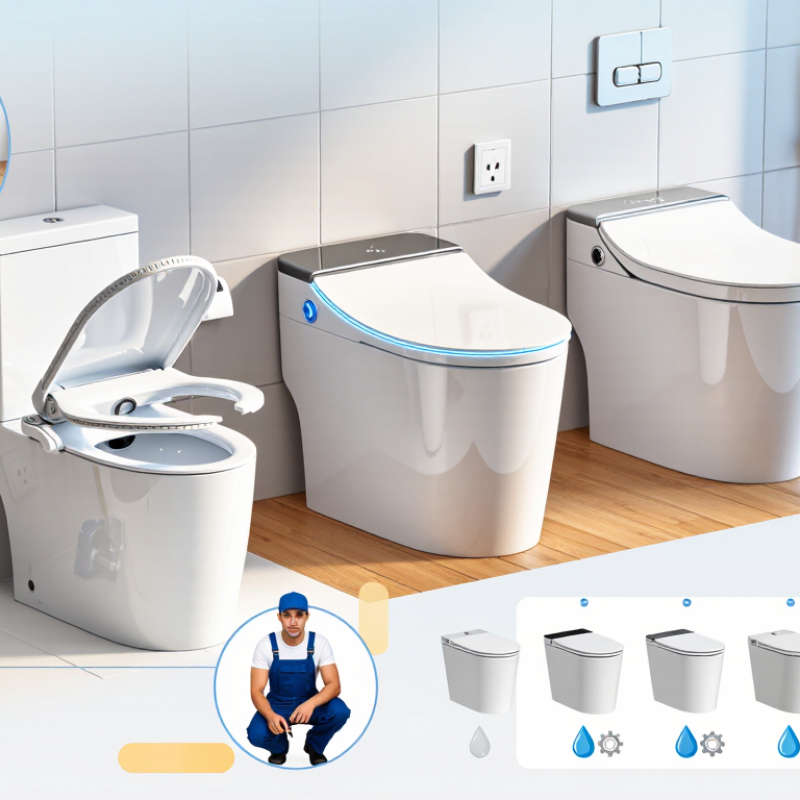
Define Household Needs and Check the EPA WaterSense 1.28-gpf Benchmark
Choosing an intelligent WC toilet starts with your household’s actual routines. Count daily users, note whether children or older adults need accessible controls, and check who will clean the seat and nozzles. A warm seat, adjustable wash settings, and night lighting may matter more than a long feature list. Measure the rough-in, doorway, and nearby outlet before shopping. A toilet that cannot fit is no bargain.
Tips: Check the EPA WaterSense label and verify the model’s rated flush volume. The benchmark is 1.28 gallons per flush or less. WaterSense certification also indicates that the toilet meets performance requirements, not just a low-water claim. Ask for the product specification sheet; do not rely on a vague listing. Measure twice. It is easy to overlook outlet placement.
Think about maintenance, too. Some intelligent models need electricity for heated seats or washing functions, so consider outlet access and what happens during a power outage. Compare cleaning access around hinges and removable parts. If your home has low water pressure, ask a qualified plumber whether the installation will work well. Features can sound impressive on paper. In practice, a confusing control panel may frustrate guests, and I would not assume every household wants automatic lid opening. Try the controls in person when possible, and leave room to reconsider.
Compare Bidet Washing, Heated Seats, Air Drying, and Automatic Flushing
A smart toilet should fit your daily routine, not just offer the longest feature list. Bidet washing can make cleanup more comfortable, especially when water temperature and spray pressure are adjustable. Look for simple controls and a nozzle that retracts for cleaning. A strong spray is not always better; sensitive users may prefer a gentler setting. Try the controls before buying, if possible.
Heated seats feel useful on cold mornings, but adjustable temperature helps prevent unnecessary warmth. Air drying can reduce toilet paper use, though it may take longer than expected. Some people still prefer a small amount of paper. That is normal. Automatic flushing is convenient when hands are full, yet an overly sensitive sensor can flush at the wrong moment. Check whether manual flushing remains available.
Compare the features with your bathroom’s layout and cleaning routine. A nearby power outlet, accessible controls, and clear maintenance instructions matter as much as extra settings. Ask how the wash nozzle is cleaned and whether the seat temperature or automatic flush can be adjusted. Small details count. One feature I would reconsider after living with it is air drying: it sounds effortless, but comfort and drying time vary from person to person. A well-chosen model should feel easy to use, easy to clean, and comfortable for everyone in the household.
How to Choose the Best Intelligent WC Toilet
Comparing bidet washing, heated seats, air drying, and automatic flushing
Bidet washing, heated seats, and automatic flushing are rated highly for everyday convenience in this illustrative editorial comparison. Air drying can reduce the need for toilet paper, though drying time and performance vary by model. Ratings are qualitative, not results from a product test or a market survey.
Measure the Rough-In and Check ADA’s 17–19-Inch Accessible Seat Height
Before comparing smart features, measure the rough-in. Measure from the finished wall—not the baseboard—to the center of the closet flange or floor bolts. Many homes use a 12-inch rough-in, but 10- and 14-inch layouts also occur. Even a small error can misalign the bowl or require costly changes. Check the toilet’s installation drawing against your measurement.
Then check seat height. Section 604.4 of the U.S. Access Board’s 2010 ADA Standards sets an accessible water closet seat height of 17–19 inches. Measure from the finished floor to the top of the seat. That range is a useful benchmark, not a guarantee of comfort for every user. A taller seat may help some people stand, while others prefer a lower position. Requirements depend on the project and location, so confirm which rules apply.
Tips: Measure again after flooring is installed. Record the wall-to-flange distance and finished-floor-to-seat-top height. Keep the installation drawing nearby. It is easy to trust an old measurement; that assumption deserves a second look.
Verify Electrical Safety and Bathroom GFCI Protection Requirements
Before choosing an intelligent WC toilet, confirm the bathroom has a properly grounded outlet and GFCI protection. A GFCI can cut power quickly when it detects current leaking from the intended circuit. Bathrooms combine water, bare feet, and electrical equipment, so this protection is essential. Check the installation manual for voltage, circuit capacity, and whether the toilet needs a dedicated circuit. Do not assume the nearest outlet is suitable.
The 2023 National Electrical Code, Section 210.8(A)(1), requires GFCI protection for bathroom receptacles in dwelling units. Local authorities may enforce a different edition or additional rules, so verify the requirements where you live. The National Fire Protection Association estimated that electrical distribution or lighting equipment was involved in about 24,200 U.S. home structure fires annually from 2015 to 2019. That figure covers many types of equipment; it does not mean intelligent toilets caused those fires. Still, it shows why careful electrical planning matters.
Look for a test and reset button on the GFCI receptacle, and test it according to its instructions. If protection comes from a breaker, ask an electrician to confirm it is working. Keep cords away from the bowl, floor, and splash zones. No extension cords. I would not rely on appearance alone: an outlet can look modern and still lack effective protection. Have a qualified electrician check grounding, circuit load, and placement before installation.
How to Choose the Best Intelligent WC Toilet - Verify Electrical Safety and Bathroom GFCI Protection Requirements
| Check | What to Verify | Practical Safety Guidance |
| Rated voltage and frequency | Compare the toilet’s rating label and installation instructions with the supply available at the bathroom outlet. | Do not assume all models use the same electrical supply. Use a model approved for the local voltage and frequency; do not use an unapproved voltage converter. |
| Power consumption and circuit capacity | Check the product’s rated wattage or current, including the maximum demand when features such as heated water, a seat heater, or a dryer operate. | Have a qualified electrician confirm that the branch circuit and breaker can support the load. Circuit requirements vary by product and local electrical code. |
| GFCI protection | Determine whether the receptacle is protected by a ground-fault circuit interrupter (GFCI), and check local requirements for bathroom receptacles. | In the United States, applicable electrical codes generally require GFCI protection for bathroom receptacles. Requirements can vary by jurisdiction and code edition; confirm with the local authority or a licensed electrician. |
| Grounding and receptacle condition | Inspect the receptacle for damage, secure mounting, correct grounding, and compatibility with the toilet’s plug. | Do not remove the grounding pin or use a damaged outlet. Ask an electrician to test or replace an outlet if its condition or grounding is uncertain. |
| Outlet location and cord reach | Check the installation instructions for the required outlet position and make sure the factory cord reaches without tension. | Keep the connection away from locations where it could be splashed or submerged, following the product instructions and local code. Do not use an extension cord or power strip unless the manufacturer and local code explicitly permit it. |
| GFCI test and reset access | Identify the GFCI test/reset buttons or the upstream GFCI device protecting the outlet. | Follow the device instructions for testing and resetting. If the GFCI trips repeatedly, stop using the toilet and have the product and circuit inspected rather than bypassing the protection. |
| Product certification and instructions | Look for electrical safety certification appropriate to the country of installation and review the complete installation and maintenance instructions. | Confirm that the certification applies to the specific model and that installation follows its stated requirements. Do not install a unit with damaged wiring or a damaged plug. |
| Professional installation | Check whether the installation requires a new receptacle, circuit changes, or work near plumbing and finished bathroom surfaces. | Use a licensed electrician for electrical work and follow local permit and inspection rules. Never work on an energized circuit. |
Note: Electrical codes and product requirements differ by country, jurisdiction, and model. The product rating label, installation instructions, and local authority requirements take precedence.
Compare Cleaning Needs, Warranty Coverage, and Lifetime Operating Costs
How to Choose the Best Intelligent WC Toilet
Compare Cleaning Needs, Warranty Coverage, and Lifetime Operating Costs
Cleaning features are useful only when they match your routine. If hard water leaves mineral marks, check whether the nozzle has an automatic rinse and whether the seat is easy to wipe around. A removable nozzle cover can make occasional cleaning simpler.
Small detail, big difference.
Self-cleaning functions still need periodic attention; they do not eliminate manual care. I still find it easy to overestimate how much automation saves.
Read the warranty for specific coverage, not just its length. Check whether electronic controls, the heated seat, and labor are included, and note any exclusions for scale buildup. Ask how repairs are arranged and whether parts remain available after the warranty ends. Then estimate operating costs over several years. Include electricity for heating and drying, water use, and replacement filters or deodorizing cartridges.
A low purchase price can look less appealing when consumables are costly.
Check the fine print.
If possible, compare energy figures using the same usage assumptions, since household habits vary. Keep a little room in your budget for maintenance; exact costs are difficult to predict.