
Top 10 Benefits of SILIMER 5091 for Global Buyers

Global plastics production reached an estimated 400.3 million tonnes in 2022, according to PlasticsEurope’s Plastics—The Fast Facts 2023. At this scale, even small changes in processing can matter to manufacturers and buyers. SILIMER 5091 is considered here as a processing additive, with potential benefits assessed through practical criteria: flow, surface quality, production consistency, and total operating cost. The real result depends on the polymer, formulation, equipment, and dosage.

For global buyers, the key question is not whether an additive sounds promising. It is whether performance can be verified on their own production line. A smoother film surface, fewer visible defects, or steadier output may be valuable—but only when supported by comparable trials and clear technical data. OECD’s Global Plastics Outlook reports that the world generated 353 million tonnes of plastic waste in 2019. That wider industry context makes efficient material use worth examining, though an additive alone cannot solve waste challenges.

This overview explores ten potential benefits of SILIMER 5091, while keeping claims tied to evidence buyers can request, such as trial conditions, product specifications, and application-specific results. Ask for the details. Suppliers’ claims should be checked against actual processing data, not assumed to apply across every resin or facility. Some benefits may be modest. That deserves an honest look, too.
Top 10 Benefits of SILIMER 5091 for Global Buyers

How SILIMER 5091 Works in Polymer Processing

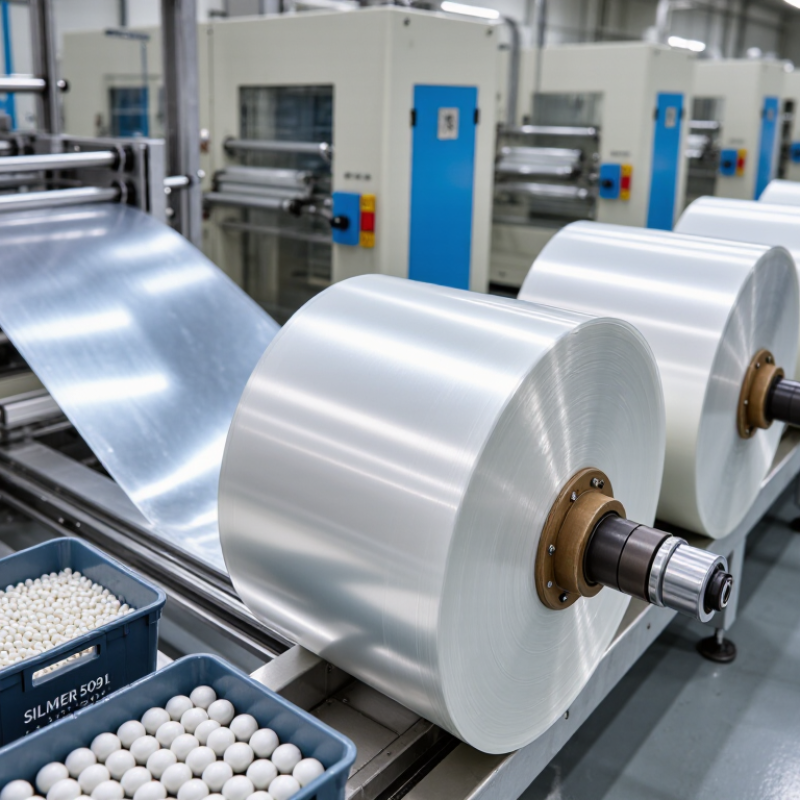
In polymer processing, a processing aid is blended into the resin, then dispersed as the material melts. Its lubricating components can reduce friction between the polymer melt and metal surfaces inside the barrel and die. The goal is steadier flow, less melt fracture, and fewer deposits around the die lip. Small changes matter. At a film line, that can mean a cleaner die and more consistent output, not a cure for every defect.

The scale is significant: Plastics Europe’s Plastics – the Fast Facts 2024 reports 413.8 million tonnes of global plastics production in 2023. The OECD’s Global Plastics Outlook reports 460 million tonnes produced in 2019, with only 9% of plastic waste recycled after losses. These figures underline why process efficiency and scrap control deserve attention. Still, additive performance depends on resin type, dosage, temperature, and screw design. Too much may affect surface feel or downstream printing and sealing. A small production trial, with melt pressure and output recorded, is more convincing than a supplier claim alone. Real lines are imperfect; one formulation may behave differently across shifts.

Top 10 Benefits of SILIMER 5091 for Global Buyers

How it works: Processing aids can migrate toward polymer–metal interfaces, helping reduce friction and melt-flow resistance. The potential benefits shown are a qualitative framework, not measured or guaranteed SILIMER 5091 performance. Confirm product-specific results through technical data and processing trials.

Processing Benefits of SILIMER 5091 for Manufacturers

For manufacturers, processing efficiency is often decided at the die, not in a brochure. A silicone-based processing aid such as SILIMER 5091 can help reduce friction between molten polymer and metal surfaces. In extrusion, that may support steadier output and a smoother surface, especially when operators are managing pressure fluctuations or visible die buildup. Results depend on the resin, additive level, and line conditions.

Small details matter. A cleaner die can mean fewer interruptions for wiping and less scrap during restarts. Operators may also find it easier to maintain a consistent appearance across film or molded parts. Those gains should be checked on the actual production line, not assumed from a laboratory sample. Compare pressure, output, surface quality, and cleaning frequency against a control run. Keep other settings stable where possible.

One practical caveat: adding a processing aid does not fix poor temperature control or an unsuitable formulation. Trial batches can also reveal trade-offs, such as changes in downstream printing or bonding. A short production trial, with clear acceptance criteria, gives manufacturers a more dependable basis for deciding whether the aid fits their process.

Product Quality and Surface Benefits Across Applications

Across films, molded parts, and other polymer applications, surface quality affects both appearance and handling. A well-chosen processing additive can help reduce friction and support smoother contact between surfaces. That may make winding, stacking, or part release more consistent. Small details matter. A clean, even finish is often easier to inspect and package.

Performance depends on the full formulation, processing temperature, and dosage. In trials, buyers can compare surface feel, slip, haze, and visible defects using the same production conditions. Record changes carefully. A smoother surface is useful, but too much slip may affect printing, bonding, or downstream assembly. Those trade-offs deserve attention before a wider production run.

Across applications, the practical benefit is repeatability, not a perfect finish in every case. Test samples after cooling and again after storage; surface behavior can change over time. Results may differ between resin types and equipment, so supplier data should be checked against actual production trials. One modest limitation: lab samples rarely capture every factory variable.

Cost and Supply Chain Advantages for Global Buyers

For global buyers, the real cost of a polymer processing additive includes more than its price per kilogram. A suitable additive may help reduce die buildup, stabilize output, or lower scrap during production. The results depend on the resin, equipment, dosage, and operating conditions. Test it on a representative line before forecasting savings.

Small process gains can matter across long production runs. For example, fewer shutdowns for die cleaning may protect delivery schedules and reduce labor costs. More consistent output can also make material planning easier. But improvement is not guaranteed. A trial that works on one extrusion line may not transfer neatly to another.

Supply reliability matters too. Buyers should compare lead times, packaging options, technical support, and documentation alongside unit cost. Ask for clear specifications and evaluate how shipments fit existing warehouse space and production schedules. A nearby stock point may reduce replenishment delays, though it could come with a higher purchase price. That trade-off deserves attention. Build the total landed cost from freight, inventory, testing, and expected process performance—not from the quotation alone.

How to Evaluate SILIMER 5091 for Your Production Needs

Evaluating a Processing Additive for Global Buyers
How to Evaluate an Additive for Your Production Needs

A processing additive should be judged on your line, not on a sales claim. Start with a controlled trial using the same resin, machine settings, and production rate as your normal run. Record melt pressure, output, surface appearance, scrap, and cleaning frequency. Small trials matter. Change one variable at a time, and compare the results with an untreated control. A faster run is not automatically better if it creates more defects or complicates downstream printing, sealing, or recycling.

Scale and sustainability make careful evaluation worthwhile. PlasticsEurope reported that global plastics production reached 400.3 million tonnes in 2022 (Plastics—the Fast Facts 2023). The OECD reported 353 million tonnes of plastic waste in 2019, with only 9% ultimately recycled (Global Plastics Outlook, 2022). These figures do not predict how an additive will perform in a specific factory, but they underline why material efficiency and end-of-life compatibility deserve attention. Check whether the formulation changes the finished part’s properties, and review supplier test methods and documentation. One limitation: short trials can miss variation across shifts, resin lots, or humid conditions. Repeat the test before changing standard settings. A slightly messy result is still useful evidence.

Top 10 Benefits of SILIMER 5091 for Global Buyers - How to Evaluate SILIMER 5091 for Your Production Needs

Potential Benefit to Evaluate Why It May Matter in Production How to Evaluate It Useful Data to Record
1. Improved processing stability Consistent processing can help reduce interruptions and variation between production runs. Run a controlled comparison using the same resin, equipment, settings, and production duration. Output rate, pressure or torque trends, temperature settings, downtime, and run-to-run variation.
2. Potential reduction in die or tool buildup Less buildup may reduce cleaning frequency and help maintain product appearance and dimensional consistency. Inspect and photograph the die or tool at predefined intervals during comparable production runs. Time to first visible buildup, cleaning frequency, deposits observed, and production interruptions.
3. More consistent surface quality Surface consistency can affect appearance, downstream coating, printing, sealing, or assembly. Compare samples under consistent lighting and use the same agreed visual or instrumental inspection method. Defect count, surface appearance, gloss or roughness readings where relevant, and inspection conditions.
4. Potential change in coefficient of friction Friction can influence film handling, feeding, stacking, and part-to-part movement. Measure the coefficient of friction using a documented method, such as ASTM D1894 for applicable plastic film or sheeting. Static and kinetic friction results, sample conditioning, test direction, and time after production.
5. Better material dispersion Uniform distribution of an additive can help limit localized variation in appearance or performance. Examine representative samples from different positions in the production run using a suitable microscopy or imaging method. Observed distribution, agglomerate count or size where measurable, sampling location, and preparation method.
6. Potential improvement in output efficiency A change that supports higher stable output may improve equipment utilization. Compare output at the same quality requirements and record the operating conditions for each trial. Mass or parts produced per unit time, reject rate, line speed, and process settings.
7. Compatibility with the existing formulation Compatibility can affect product appearance, mechanical properties, and process consistency. Test the intended formulation at the planned addition level and inspect for visible defects or property changes. Formulation, addition level, appearance, dispersion observations, and relevant product-property results.
8. Retention of required mechanical properties Processing or surface changes should not compromise the product’s performance requirements. Compare treated and untreated samples using the relevant product specification and test method, such as ASTM D638 for applicable plastics tensile testing. Tensile strength, elongation, or other specified properties; specimen preparation and test conditions.
9. Suitability for downstream operations Printing, coating, bonding, sealing, or assembly requirements may determine whether a formulation is usable. Run representative downstream trials after a defined conditioning period and assess against the existing acceptance criteria. Adhesion or seal results where applicable, print quality, rejects, conditioning time, and process settings.
10. Potential reduction in total operating cost Material price alone does not show the full cost impact; output, waste, cleaning, and downtime also matter. Calculate cost per accepted unit using production data from comparable trials and include all relevant operating costs. Additive use, material consumption, accepted output, scrap, cleaning time, downtime, and cost per accepted unit.

Evaluation note: These are potential benefits to verify, not guaranteed performance claims. Results depend on the material formulation, addition level, equipment, processing conditions, and end-use requirements. Use matched control and trial runs, and confirm product-specific recommendations and compliance requirements with the supplier.

Article Source:

^