7 Tips for Buying the Best Plastic Ceiling?

Choosing a plastic ceiling is not simply a matter of matching color and price. The right panel must suit the room’s moisture, temperature, lighting, and maintenance demands. A bathroom ceiling faces different risks from a retail store or a covered balcony. Small details matter, including panel thickness, joint design, surface texture, and the quality of the supporting frame.

Dr. Michael Braungart, a leading materials scientist and co-founder of Cradle to Cradle, offers a useful principle: “Waste equals food.” His statement encourages buyers to consider material cycles, durability, and responsible end-of-life choices. For a plastic ceiling, that means asking whether the product contains recycled content, can be separated for recycling, and comes with credible environmental documentation. Claims should be checked carefully. Not every green label proves much.

These seven tips will examine practical buying decisions. They will cover moisture resistance, fire performance, indoor air quality, installation systems, cleaning needs, warranty terms, and supplier reliability. Look closely at the sample. A bright, glossy panel may hide visible joints under strong lights. A low price may also reflect thinner material or weaker accessories. I have seen attractive specifications fail when installers ignored expansion gaps. That mistake is easy to make. It is also expensive to correct.

No product is perfect. A durable plastic ceiling may still raise disposal concerns. A recyclable panel may require a specialist collection route. Thoughtful buyers compare the full service life, not only the first invoice.
7 Tips for Buying the Best Plastic Ceiling?

Understanding Plastic Ceiling Types and Their Common Applications

Plastic Ceiling Types and Their Common Applications

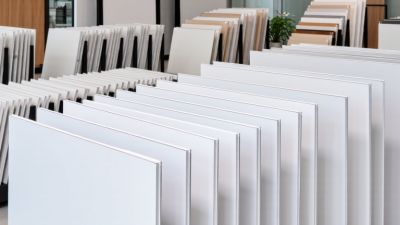
Plastic ceilings are not one single product. PVC panels are lightweight, moisture-resistant, and easy to wipe clean. They suit bathrooms, kitchens, laundry rooms, and utility areas. Their tongue-and-groove edges can create a neat surface, although poor alignment becomes obvious under bright lighting.

Polystyrene tiles are thin and inexpensive. They work well in bedrooms, offices, and small renovation projects. However, they can dent during installation and may look less refined around uneven joints. Acrylic ceiling sheets offer a smoother, brighter appearance. They are useful for decorative features, light-diffusing panels, and modern commercial interiors. Always check fire ratings and local building requirements before choosing any plastic material.

Tip 1: Match the ceiling type to moisture exposure. A bathroom needs better water resistance than a dry bedroom.

Tip 2: Inspect thickness, surface finish, and edge quality before buying. Thin panels may flex or show installation marks.

Tip 3: Measure the room twice, then add a small allowance for cutting waste. I have found that rushed measurements create more problems than difficult installation. Also consider ventilation, access panels, and the ceiling’s existing condition. Plastic can hide stains, but it cannot repair leaks.

Tip 4: Request technical data, cleaning guidance, and warranty terms from a reliable supplier. Products can look similar while performing very differently.

Checking Material Quality, Strength, and Moisture Resistance

7 Tips for Buying the Best Plastic Ceiling

Material quality should be checked before appearance. During site inspections, I look for even color, clean edges, and a firm surface. Cheap panels often feel unusually flexible or show tiny waves under light. Ask for the material specification, thickness, and production standard. A sample is more trustworthy than a showroom photograph. Cut one edge carefully, if permitted. The inside should look consistent, not foamy or brittle.

Strength matters during installation and daily use. Press the center of a panel gently. It should resist bending without cracking or permanently changing shape. Wider panels need stronger support because their centers can sag. Check the ceiling frame spacing, fastening method, and recommended load limits. Plastic ceilings are not designed to hold heavy fixtures alone. Leave lighting supports attached to the structure.

Moisture resistance deserves close attention in bathrooms, kitchens, and humid rooms. Look for sealed surfaces and joints that reduce water entry. Ask whether the panel resists swelling, staining, and mold growth under damp conditions. Do not rely only on the phrase “waterproof.” Request test information when available. I have seen moisture-resistant panels fail because water entered through poorly sealed edges. Installation quality matters. Ventilation matters too. A small sample test may reveal more than confident sales language. I would also inspect the panel after several days near steam, although this imperfect test cannot replace laboratory data.

7 Tips for Buying the Best Plastic Ceiling: Checking Material Quality, Strength, and Moisture Resistance

The chart compares typical performance indices for commonly used plastic ceiling materials. Scores are normalized from 0 to 100 using general material-property benchmarks, including dimensional consistency, flexural strength, and water-resistance behavior. Actual performance varies with formulation, thickness, reinforcement, and installation quality.

When selecting a ceiling panel, check technical test data such as water absorption under ISO 62, flexural strength under ISO 178, surface consistency, panel thickness, edge stability, and resistance to mold-prone humidity. The index is a buying guide rather than a product certification.

Comparing Designs, Sizes, Colors, and Surface Finishes

7 Tips for Buying the Best Plastic Ceiling

A plastic ceiling should match the room’s purpose, not only its appearance. In kitchens and bathrooms, choose designs with sealed joints and moisture-resistant surfaces. A matte finish hides fingerprints and minor scratches better than a glossy one. Glossy panels reflect more light, but they can reveal uneven walls.

Measure the ceiling twice before ordering. Record length, width, beams, vents, and light openings. Large panels create fewer joints, while smaller panels are easier to carry and cut. I once underestimated a narrow hallway and wasted several pieces. That mistake changed how I plan material allowances. Leave extra pieces for damaged edges and future repairs.

Color affects the room’s visual temperature. White can make a low ceiling feel higher, while soft gray adds less glare. Wood-look patterns bring warmth, but busy patterns may overwhelm small spaces. Request physical samples when possible. Screen colors can mislead. Check the sample under daylight and artificial light.

Surface texture also affects cleaning. Fine textures disguise dust, yet deep grooves may collect grease. Inspect the locking edges carefully. They should connect evenly without forcing the panels. Read the installation guide and fire-performance information before purchase. Product specifications matter more than attractive photographs. If the ceiling will face heat or constant humidity, ask a qualified installer whether the selected material is suitable. Some compromises remain unavoidable. A beautiful finish may need more maintenance.

Evaluating Installation Methods, Maintenance, and Safety Features

Choosing a plastic ceiling requires more than comparing color and price. Installation method affects safety, alignment, and future repairs. For small rooms, a lightweight clip or tongue-and-groove system can reduce cutting and dust. Larger areas may need a suspended grid, leaving access above the panels. Keep electrical work separate. The U.S. Bureau of Labor Statistics recorded 1,075 construction fatalities in 2023, so rushed overhead installation deserves serious caution.

Inspect the ceiling surface before fixing panels. Uneven framing can create visible waves, especially under bright lighting. Use corrosion-resistant fasteners in kitchens, bathrooms, and coastal buildings. Leave small expansion gaps around edges, because plastic can move with temperature changes. I once underestimated this detail on a humid renovation; the panels looked tight at installation but shifted later. That mistake is avoidable.

Maintenance should be simple, not careless. The U.S. Environmental Protection Agency recommends indoor humidity between 30% and 50% to reduce moisture problems. Wipe panels with mild soap and a soft cloth. Avoid abrasive pads, strong solvents, and excessive water near joints. Check seams twice yearly for staining, loosened clips, or sagging. Ask for the product’s fire-test documentation, including flame-spread and smoke-development results under ASTM E84 or an equivalent standard. A low-cost ceiling without clear testing records may create uncertainty during inspection. Safety labels, load limits, and installation instructions should remain available after the project ends.

Balancing Product Quality, Supplier Reliability, and Total Cost

7 Tips for Buying the Best Plastic Ceiling

Balancing quality, supplier reliability, and total cost requires more than comparing prices. PlasticsEurope reported global plastic production reached 400.3 million tonnes in 2022. This scale creates choices, but also uneven quality. Inspect panel thickness, flatness, color consistency, locking edges, and surface finish. Ask for batch samples, not only catalog photographs. Tip: Request test reports for moisture resistance, impact strength, fire behavior, and UV exposure. ASTM or ISO-based testing gives evidence, although one certificate never proves everything.

Supplier reliability affects installation schedules and hidden labor costs. Request production lead times, replacement policies, packaging details, and a written quality-control process. Check whether the supplier can provide matching panels months later. That small detail matters. The 2023 UNEP Global Status Report for Buildings and Construction found buildings generated about 37% of global energy and process-related emissions in 2022. Therefore, compare more than the purchase price. Include transport, cutting waste, maintenance, cleaning, replacement frequency, and end-of-life handling. Tip: Calculate cost per usable square meter, not cost per carton.

A cheaper panel can become expensive after warping or color fading. I still find low prices tempting, especially under project pressure. That is the weak point. Ask for a small trial installation in a humid or sun-exposed area. Record delivery damage and installation time. Supplier references help, but they are not perfect evidence. Review current production samples, warranty wording, and response speed before placing a large order.

7 Tips for Buying the Best Plastic Ceiling? - Balancing Product Quality, Supplier Reliability, and Total Cost

Tip Evaluation Dimension Recommended Benchmark What to Verify Cost or Risk Effect Buying Signal
1 Compare material composition Choose panels made from clearly identified PVC or other specified polymers, with consistent thickness and a documented formulation. Request the technical data sheet, material declaration, panel thickness, dimensions, surface finish, and batch consistency information. Higher material consistency can reduce warping, breakage, replacement work, and installation waste. Clear specifications with no vague “premium plastic” claims.
2 Check performance and safety Select a product whose fire, moisture, temperature, and indoor-use characteristics match the room and local building requirements. Review fire-test classification where required, moisture resistance, recommended service temperature, smoke or odor information, and applicable safety documentation. A suitable specification lowers the risk of premature deterioration, unsafe use, or non-compliance. Evidence-based claims supported by test reports.
3 Evaluate dimensional stability Prefer panels with uniform edges, stable interlocking joints, and published dimensional tolerances suitable for the planned installation. Inspect samples for bowing, twisting, uneven grooves, color variation, and joint fit. Confirm storage and installation requirements. Stable panels reduce visible gaps, alignment problems, cutting losses, and installer labor. Clean, repeatable fit across several sample pieces.
4 Review supplier reliability Choose a supplier that provides consistent communication, documented production controls, and realistic delivery commitments. Ask about production capacity, quality-control checkpoints, lead time, order tracking, packaging, and the process for handling defects. Reliable fulfillment reduces project delays, emergency purchases, and schedule-related labor costs. Written commitments and responsive pre-sale support.
5 Calculate total delivered cost Compare the full project cost rather than the panel price alone: product, accessories, freight, taxes, waste, installation, and maintenance. Use a cost worksheet and include trims, suspension components, fasteners, packaging charges, delivery distance, estimated waste, and labor hours. A lower unit price may be offset by higher waste, accessory costs, freight, or installation time. Transparent quotation with every charge listed.
6 Confirm installation compatibility Ensure the panel profile, dimensions, trims, and fixing method work with the existing ceiling structure and required access points. Verify substrate condition, support spacing, expansion allowance, lighting and ventilation clearances, cutting method, and recommended accessories. Compatibility prevents rework, excessive offcuts, structural adjustments, and difficult maintenance access. Complete installation system, not panels alone.
7 Assess warranty and long-term support Select a supplier offering understandable warranty terms, replacement procedures, and access to matching panels or trims for future repairs. Check warranty duration, exclusions, claim documentation, color or batch matching, spare-part availability, and after-sales response time. Good support limits the financial impact of defects, accidental damage, and future remodeling. Specific written warranty with a defined claim process.
^