
China Top Fitness Trampoline Suppliers for Global Buyers

Choosing a supplier is not merely a price comparison. For global buyers, frame stability, mat tension, spring or elastic-cord quality, and consistent production matter just as much. Fitness Trampolines may look similar in a product photo, yet small differences become obvious when a unit is assembled on a living-room floor. A frame that rocks, a mat that sags, or missing replacement parts can turn a promising order into a costly problem.

Rebound-exercise educator Albert E. Carter is often quoted as saying, “Rebounding is the most efficient, effective form of exercise yet devised by man.” That line is memorable, though buyers should treat broad performance claims with care and assess products on verifiable specifications. This guide examines China-based suppliers through practical questions: What materials do they use? Can they provide clear product details, sample units, and dependable communication? Do their quality checks match the intended market and order size?

Details matter. Ask for frame dimensions, weight limits, packaging measurements, and written warranty terms. Request close-up photos of welds, feet, and jumping surfaces—not only polished studio images. Confirm how replacement parts are handled. A supplier’s response can reveal as much as its catalog. Still, no checklist removes every risk; samples and independent inspection may add time and cost. The aim here is a careful shortlist, not a promise that one factory suits every buyer.
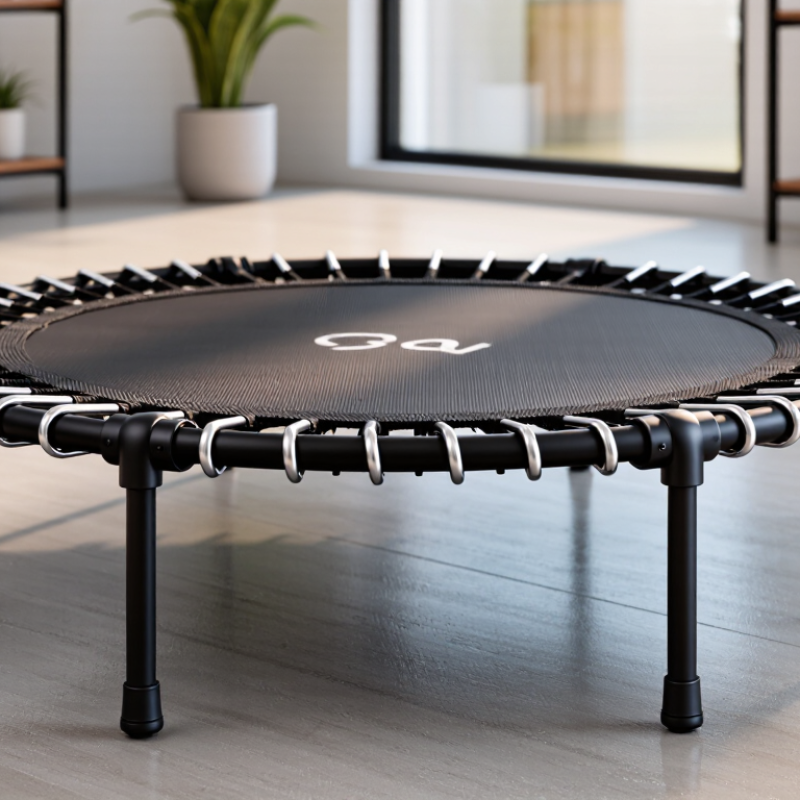
China Top Fitness Trampoline Suppliers for Global Buyers

Fitness Trampoline Market Scope: 36–48-Inch Models for Home and Gym Use

Global buyers comparing fitness trampolines should treat 36–48 inches as a practical size range, not a measure of performance. The stated diameter may include the frame, leaving a smaller jumping surface. Ask suppliers to provide both measurements and a clear product drawing. Fit matters. Measure the available floor space, including room around the frame for safe mounting and movement.

A 36-inch model can suit compact home workouts or limited storage areas. A 48-inch model may offer more room for controlled jumps, but it also needs a larger footprint. For shared gym use, review frame stability, mat tension, leg design, and the feel of the bounce. Ask how the product is tested and what user weight limits apply. Details matter. A larger size alone does not guarantee a smoother or safer workout.

Supplier checks should cover assembly instructions, replacement-part availability, packaging dimensions, and consistent quality records. Request samples when possible, then inspect welds, stitching, fasteners, and the mat’s rebound after repeated use. Also confirm that product documents are clear for the intended market. A specification sheet can look complete while omitting useful details; that deserves a second look.

China Supplier Evaluation: 100–150 kg Load Ratings and ISO 9001 Controls

For global buyers comparing China’s fitness trampoline suppliers, a stated 100–150 kg load rating needs clear supporting evidence. Ask whether the figure describes a user limit, a static test load, or a dynamic test result. These are not interchangeable. A product label alone cannot explain how the frame, springs, and mat perform under repeated bouncing.

Request test reports that identify the tested model, method, and date. Check whether the rating applies to one user and whether the report reflects the finished product, not just a component. Look closely at frame joints, spring hooks, stitching, and leg stability. A small wobble on a showroom floor may point to a problem worth investigating. Details matter.

ISO 9001 can indicate that a supplier uses documented quality controls, but it does not certify a trampoline’s load capacity or safety by itself. Ask how incoming materials, production checks, and final inspections are recorded. Request recent inspection samples and confirm they match the goods being quoted. A certificate is useful. It is not a product test. Supplier records can still leave gaps, so compare documents with physical samples and clarify any mismatch before placing an order.

China Top Fitness Trampoline Suppliers for Global Buyers - China Supplier Evaluation: 100–150 kg Load Ratings and ISO 9001 Controls

Buyer screening framework. Load figures below are procurement targets, not verified ratings for any specific supplier. Confirm all product claims and certificates directly with the manufacturer and the relevant issuing or testing body.

Evaluation dimension Buyer screening benchmark Evidence to request Evaluation check
Rated user load Product options covering 100 kg, 120 kg, or 150 kg, as required by the buyer Product specification, rating label artwork, and written definition of the maximum user weight Confirm the rating applies to the complete assembled trampoline and matches the model being quoted.
Load-test method A documented test plan appropriate to the product design and intended use Test procedure, sample identification, applied load, test duration or cycles, and results Distinguish static load from repeated or dynamic-use testing; do not treat one as proof of the other.
Frame and joint strength Construction and joints designed for the declared load and intended exercise use Frame material and dimensions, joint details, inspection records, and relevant test results Check for permanent deformation, cracked joints, loose connections, or other defined failure criteria after testing.
Mat, springs, and elastic components Components specified for the exact model and controlled against approved requirements Material specifications, supplier inspection records, component traceability, and applicable durability-test data Verify component changes are reviewed and that test samples represent production materials and construction.
Stability and user safety A product-specific assessment of stability, exposed edges, pinch points, and assembly risks Risk assessment, assembly instructions, warnings, and inspection or test records Review against the destination market’s applicable requirements; confirm instructions match the shipped configuration.
ISO 9001 quality management system A current ISO 9001 certificate whose scope covers relevant manufacturing or quality activities Certificate number, validity dates, certified site and scope, and certification-body details Check certificate status with the issuing body or applicable accreditation directory. ISO 9001 is a QMS standard, not product certification.
Document and change control Controlled specifications, drawings, inspection criteria, and revision history Sample document register, revision records, and change-approval workflow Confirm production and inspection use the current approved revision and that changes are communicated to the buyer.
Incoming and final inspection Defined inspection checks with recorded results and handling of nonconforming items Inspection plan, sample checklist, recent anonymized inspection records, and corrective-action procedure Check that inspection criteria are measurable, records identify the model or lot, and defects are dispositioned.
Production traceability A practical method to link finished products or lots to production and inspection records Example batch or lot coding, production record fields, and traceability procedure Verify a sample unit can be traced to its production lot and relevant quality records.
Buyer acceptance decision Approve only after document review, sample evaluation, and agreement on the final product specification Signed specification, approved sample record, agreed test requirements, and inspection plan Record each requirement as verified, pending, or not met; do not infer supplier performance from a certificate alone.

Manufacturing Standards: ASTM F381, EN 71, Rebound Testing, and Frame Safety

For global buyers, trampoline compliance begins with documented manufacturing controls, not attractive product photos. ASTM F381 covers consumer trampoline components, assembly, use, and labeling. Suppliers should show clause-based inspection records, enclosure measurements, padding thickness, and warning-label checks. EN 71 may apply when a trampoline is classified as a toy, but it should not replace trampoline-specific safety evaluation.

Rebound testing needs clear conditions. Ask for the test mass, drop height, cycle count, mat deflection, and recovery time. “Passed rebound testing” is too vague. A useful report should identify the sample, test date, equipment, and failure limits. CPSC’s Trampoline Injury Report estimated about 100,000 emergency-department-treated injuries in the United States during 2009. That figure shows why repeatable testing matters, although it does not predict every product’s risk.

Frame safety deserves physical evidence. Inspect weld penetration, tube thickness, leg-locking points, corrosion protection, and deformation after repeated loading. ASTM F381 alignment is helpful, yet factory inspection still matters. EN 71 laboratory results may cover selected hazards, not the whole structure. Some supplier files look complete but omit raw test data. That is a weakness. Buyers should request independent laboratory reports, production-sample testing, and corrective-action records. Small gaps can become large problems.

Fitness Trampoline Safety Standards & Verification

A qualitative scope map of selected safety references and a separate manufacturer rebound-check category.

How to read: 1 indicates the subject is within the reference’s general scope; 0 indicates it is not the primary subject. Rebound consistency is shown as a manufacturer verification activity, not as a claim that these standards prescribe a universal rebound test. EN 71 applies to toys; confirm the product’s intended use, market, and applicable standard edition before making compliance claims. This chart is a scope overview, not a certification or pass/fail result.

Export Readiness: MOQ, 20–40-Day Lead Times, Packaging, and Global Logistics

For global buyers, export readiness starts with a clear minimum order quantity, not a vague price sheet. MOQ can vary by trampoline size, frame finish, and whether the carton uses standard or custom printing. Ask for the quantity per model and color in writing. Small trial orders may cost more per unit. That trade-off is real.

A quoted 20–40-day lead time should specify when the clock starts, such as after deposit and artwork approval. It usually covers production, not ocean transit or customs clearance. Request dated checkpoints for material preparation, assembly, inspection, and packing. Delays can happen when specifications change mid-run. Paper schedules can look tidy.

Packaging deserves a physical review. Ask for carton dimensions, gross weight, and photos of protective inserts around the frame and trampoline bed. These details affect storage and freight calculations.

For logistics, compare port-to-port and door-to-door quotations, and confirm who prepares export documents and books cargo. Keep a small buffer before seasonal launch dates; estimates are useful, but they are not promises.

A detail buyers sometimes miss: the smallest packed carton is not always the safest one after repeated handling.

Supplier Comparison: Price, Customization, Certifications, Warranty, and Capacity

For global buyers, compare fitness trampoline suppliers by landed cost, not unit price alone. A low quotation may exclude cartons, spare springs, inspection, or freight preparation. Request a sample and a line-item quote. Check frame tubing, weld finish, mat stitching, and whether the quoted model matches the production order. Small differences matter.

Customization can cover mat color, logo placement, packaging, and rebound feel, but each change may affect tooling time or minimum order quantity. Ask for a signed specification sheet and a pre-production sample. Certifications should match the exact product and destination requirements. Request current reports from an accredited testing body, then verify the model numbers. A general factory certificate may not cover every trampoline.

Warranty terms deserve close reading. Confirm coverage for the frame, mat, springs, and labor, plus the process for replacement parts. A long warranty is less useful if claims require costly return shipping. Capacity is more than a monthly figure. Ask how many units are available during peak season, what lead time includes, and whether quality checks are recorded. Supplier data can be optimistic. An independent inspection may add cost, but it can reveal uneven stitching or packaging damage before a large shipment leaves.

^