


Top 10 Waterproof Wall Panels for Commercial Projects?
Commercial interiors face relentless moisture from washrooms, kitchens, healthcare rooms, laboratories, and busy cleaning routines. That makes material selection more than a visual decision. It affects hygiene, maintenance costs, downtime, and long-term building performance.
The World Health Organization’s Guidelines for Indoor Air Quality: Dampness and Mould connects persistent moisture with respiratory risks and building-related health concerns. The U.S. Environmental Protection Agency also emphasizes moisture control in its Mold Remediation in Schools and Commercial Buildings guidance. These findings support a practical question: can wall protection resist water at joints, edges, penetrations, and damaged surfaces?
This guide examines the Top 10 Waterproof Wall Panels for Commercial Projects. It compares cleanability, impact resistance, installation speed, fire performance, chemical exposure, lifecycle value, and specification support. “Waterproof” still needs careful verification. Some products resist surface splashes but fail behind seams or poorly sealed fixtures. That distinction is easy to overlook.
Building-science expert Joseph Lstiburek has stated, “Water is the most damaging thing in buildings.” His observation remains highly relevant when contractors assess commercial wall systems. Product data sheets, third-party testing, and project references matter more than attractive samples.
The analysis also considers findings from ASTM testing practices and guidance from organizations such as the International Code Council. However, no panel is universally best. A hospital corridor, commercial kitchen, and warehouse need different performance priorities. Sometimes, the cheapest option becomes expensive after repeated repairs. That deserves honest reflection.
These recommendations are designed to help architects, contractors, owners, and facility teams make better-informed decisions. The ranking is useful, but project conditions should always lead.
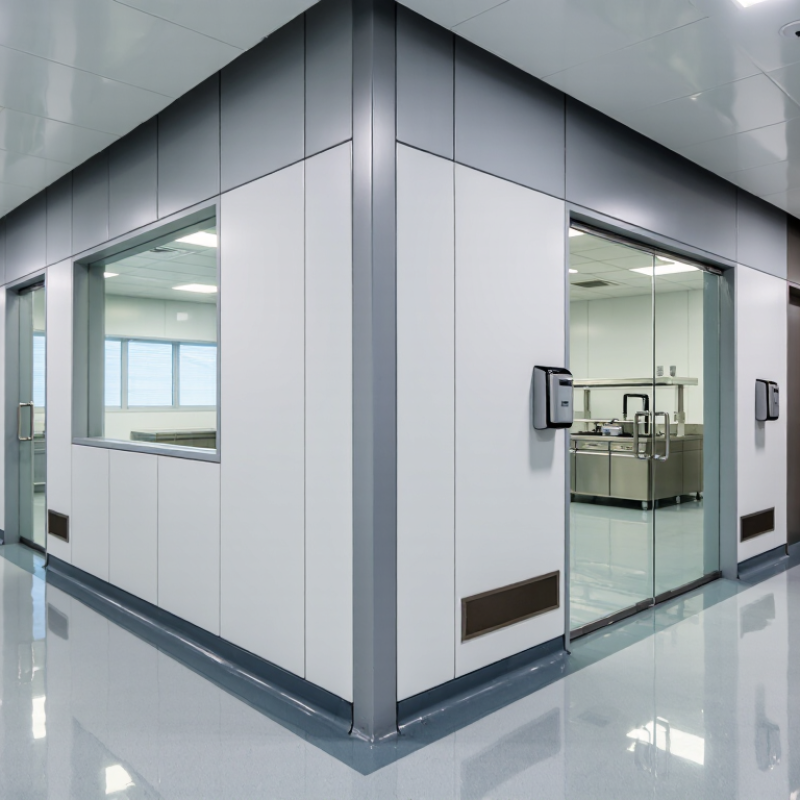
What Are Waterproof Wall Panels for Commercial Projects?
Waterproof wall panels for commercial projects are rigid surface systems designed to resist water, steam, cleaning chemicals, and daily impact. They are commonly used in bathrooms, kitchens, healthcare rooms, changing areas, and utility spaces. Unlike ordinary painted drywall, these panels create a more continuous surface with fewer weak points. Materials may include PVC, fiberglass-reinforced plastic, compact laminate, or coated composite boards. Their performance depends on more than the panel itself. Joints, corners, penetrations, and the supporting wall must also be sealed correctly.
In commercial work, I look for documented water resistance, fire performance, cleanability, and impact strength. Panel thickness matters near carts, equipment, and busy corridors. A smooth finish can reduce soil buildup, but it may show scratches more easily. A textured finish hides marks better, yet it can require deeper cleaning. This trade-off is easy to overlook. A panel may look completely sealed during installation and still fail around a poorly fitted pipe. Careful detailing and site inspection remain essential.
Tips: Confirm the substrate is dry, stable, and reasonably flat. Use compatible sealants and approved trims at every joint. Ask for test data, maintenance guidance, and installation limits before ordering. Check how panels meet floors, ceilings, doors, and drains. Mock-up testing can reveal awkward seams early. Do not assume “waterproof” means maintenance-free. Regular inspections still matter.
Top 10 Waterproof Wall Panels for Commercial Projects? - What Are Waterproof Wall Panels for Commercial Projects?
| Rank | Panel Type | Typical Thickness | Typical Sheet Size | Waterproof Performance | Commercial Applications | Key Advantages | Important Considerations |
|---|---|---|---|---|---|---|---|
| 1 | PVC Solid Wall Panels | 3–10 mm | 1,220 × 2,440 mm; custom sizes also available | Non-porous and unaffected by routine water exposure when seams and penetrations are properly sealed | Restrooms, utility rooms, food-service areas, healthcare corridors, locker rooms | Lightweight, easy to clean, moisture-resistant, relatively quick to install | Thermal expansion must be allowed for; fire performance varies by formulation |
| 2 | Fiberglass-Reinforced Plastic (FRP) Panels | 1.5–4 mm | 1,220 × 2,440 mm; larger formats may be available | Water-resistant, non-absorbent facing with sealed joints; suitable for frequent wash-down | Commercial kitchens, wash bays, food-processing support rooms, service areas | Impact-resistant surface, hygienic finish, low maintenance, broad availability | Requires compatible adhesive and trim; textured surfaces may retain more dirt than smooth finishes |
| 3 | High-Density Polyethylene (HDPE) Panels | 6–13 mm | 1,220 × 2,440 mm; custom fabrication is common | Closed-cell, non-absorbent material with excellent resistance to water and many chemicals | Correctional facilities, hospitals, wet rooms, animal-care facilities, high-abuse areas | Durable, impact-resistant, easy to weld or mechanically fasten, hygienic | Higher material cost; movement from temperature changes requires detailing |
| 4 | Compact High-Pressure Laminate (HPL) | 6–12 mm | Approximately 1,220 × 2,440 mm; project sizes vary | Water-resistant solid laminate; exposed cut edges and joints must be sealed | Washrooms, shower cubicles, changing rooms, hospitality interiors, healthcare spaces | Decorative options, strong scratch resistance, rigid construction, easy routine cleaning | Not intended for permanently submerged conditions; edge detailing is critical |
| 5 | PVC Foam Board Panels | 5–20 mm | 1,220 × 2,440 mm; lightweight formats are widely used | Closed-cell and moisture-resistant; waterproof performance depends on sealed joints | Retail back-of-house areas, washrooms, partitions, wall protection, temporary fit-outs | Lightweight, machinable, moisture-resistant, suitable for concealed services | Less impact-resistant than HDPE or solid FRP; verify load and fire requirements |
| 6 | Phenolic Resin Panels | 6–13 mm | Approximately 1,220 × 2,440 mm; larger architectural panels may be available | Low water absorption and good resistance to humidity when edges are properly finished | Wet-room partitions, laboratories, healthcare facilities, washrooms and cubicles | Hard surface, durable, hygienic, available in decorative finishes | Product-specific fire and chemical ratings must be checked before specification |
| 7 | Aluminum Composite Panels | 3–6 mm overall | 1,220 × 2,440 mm and larger architectural formats | Aluminum faces resist moisture; perimeter joints, cores and penetrations require proper sealing | Service corridors, commercial interiors, splash zones, transport and utility buildings | Flat, lightweight, rigid, easy to fabricate, available in smooth coated finishes | Core type affects fire performance; avoid specifying non-rated cores where codes require fire-rated construction |
| 8 | Glass-Mat Gypsum Sheathing with Waterproof Finish | 12.5–16 mm | 1,200 × 2,400 mm; board dimensions vary by market | Moisture-resistant substrate; it is not a complete waterproof system without membranes and sealed joints | Shower rooms, wet-area partitions, exterior-backed walls, commercial renovation projects | Stable substrate, good dimensional consistency, compatible with tile and coating systems | Requires a complete waterproofing assembly; exposed board should not be treated as a finished wet-area surface |
| 9 | Cement Backer Board with Waterproof Membrane | 6–13 mm board plus membrane | Typically 900 × 1,800 mm or 1,200 × 2,400 mm | Provides a durable wet-area substrate when membrane, fasteners, joints and transitions are correctly treated | Tiled commercial showers, spas, kitchens, healthcare wet rooms and wash-down areas | Non-combustible substrate options, strong tile support, suitable for demanding wet areas | Heavy and labor-intensive; board alone is not waterproof and requires detailed installation |
| 10 | Waterproof PVC Decorative Panels | 5–10 mm | Approximately 600–1,000 mm wide × 2,400–2,700 mm high | Designed for wet interiors with interlocking or sealed joints; installation quality determines final water resistance | Hotel bathrooms, office washrooms, retail renovations, residential-style commercial interiors | Fast installation, decorative appearance, low maintenance, minimal wet trade work | Confirm impact resistance, UV stability and fire classification for the intended project |
Note: Dimensions and performance characteristics are typical industry ranges, not universal specifications. Always verify the current technical data sheet, fire classification, chemical resistance, installation method and local building-code requirements for the selected panel system.
Related Posts
-
Exploring the Versatility of Plastic Panels: Innovative Uses for Home and Industry
-
2026 How to Choose the Best Plastic Wall Panels for Your Needs?
-
How to Source Wall Boards Globally in 2026?
-
How to Choose the Best Waterproof Panels for Your Project?
-
China Top Waterproof Panels for Your Procurement Needs?
-
Top 10 Door Jambs for Your Next Building Project?