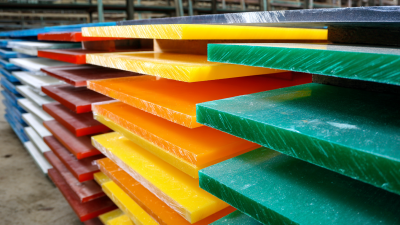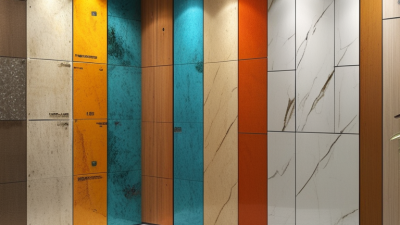
Choosing the best plastic panels begins with the project, not the product label. A garage wall, food-processing room, exterior sign, and laboratory bench demand different performance. Moisture, heat, impact, sunlight, chemicals, and cleaning methods can change the decision quickly. A glossy surface may look impressive, yet it can scratch easily or reveal dust under strong lighting.
Polymer scientist Dr. George Wypych explains, “The properties of polymers depend on their chemical structure and processing conditions.” That principle deserves attention. PVC, polycarbonate, acrylic, HDPE, and polypropylene do not behave alike. Each material offers a different balance of stiffness, clarity, weight, temperature resistance, and cost. Thickness matters too. A thin panel may flex beside a workbench, while a thicker sheet could create unnecessary weight and expense.
Real project experience also shows that installation details matter. Measure the wall twice. Check expansion space. Confirm whether standard tools can cut the sheet cleanly. Ask suppliers for technical data, fire ratings, chemical-resistance charts, and sample pieces. A small sample can reveal glare, texture, odor, and cleaning problems before a large purchase.
There is no perfect panel.
I sometimes see buyers focus too heavily on appearance. That is understandable, but incomplete. The strongest choice connects material performance with actual site conditions, maintenance habits, and budget limits. This guide will compare the key types of plastic panels, explain their practical differences, and identify the questions that lead to a safer, more reliable purchase. Your project may still require expert review, especially when structural, electrical, or regulated applications are involved.
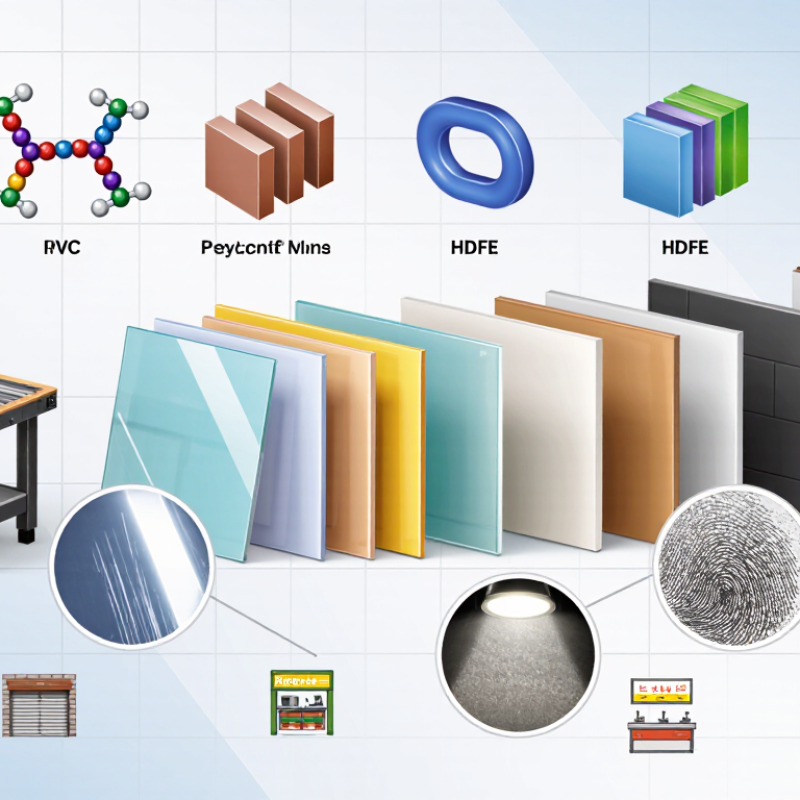
Choosing plastic panels starts with the working environment, not color or price. I begin by writing a requirement sheet for every project. Record panel span, support spacing, impact source, and expected weight. A ceiling panel faces different stress from a machine guard. A panel that feels rigid in a showroom may flex after installation. Measure twice.
Temperature needs realistic numbers. Note normal, peak, and repeated heating or cooling. Some plastics soften, expand, or become brittle outside their useful range. Moisture also affects the decision. For a wash area, check water absorption, edge sealing, and hidden condensation. Chemical exposure requires a written list, not “corrosion resistant.” Cleaning agents, oils, acids, and solvents can react differently. Request compatibility data, then test a small sample under actual concentration and contact time. I once underestimated a detergent splash. The surface survived, but the cut edge discolored. That result changed our installation detail.
Fire risk deserves early attention. Ask for tested fire behavior and the exact mounting conditions used. Results can change with thickness, backing, joints, and air gaps. Confirm requirements with a qualified fire professional and applicable local codes. Do not rely on a generic flame-retardant claim. Keep drawings and technical sheets with project records. If data is missing, pause the purchase. A cheaper panel is not a saving when replacement becomes necessary. Recheck assumptions before final approval.
How to Choose the Best Plastic Panels for Your Project?
Panel density changes more than shipping weight. It also affects handling, support design, and the material’s feel during installation. PVC weighs about 1.4 g/cm³, making it the heaviest option here. HDPE is much lighter, at roughly 0.95 g/cm³. PC sits between them at approximately 1.2 g/cm³.
Weight matters. In practical work, HDPE panels are easier to carry across a large site and place on temporary structures. However, lighter does not always mean better. HDPE can flex under load, so wider panels may need closer framing or thicker sections. PVC feels more rigid in many applications, but its extra weight can complicate overhead installation. I have seen teams underestimate this issue and spend more time correcting alignment than expected.
PC offers a useful balance between moderate weight and strong impact resistance. It can suit protective screens, machine guards, and areas exposed to occasional knocks. Still, density alone cannot predict performance. Temperature, thickness, support spacing, surface exposure, and fastening method matter greatly. A small sample test is wise. Check drilling, bending, edge damage, and visible deflection before ordering full sheets. My own preference has changed after testing: the “strongest” panel on paper was not always the easiest or safest to install.
How to Choose the Best Plastic Panels for Your Project?
Choosing panel thickness requires more than measuring the visible gap. Start with the unsupported span, expected load, and panel support conditions. A long span needs greater stiffness, not only greater strength. Plastic modulus values commonly range from 0.8 to 2.4 GPa, so material selection strongly affects deflection.
For a simply supported panel, estimate bending deflection under uniform and point loads. Compare the result with an acceptable service limit, such as span divided by 200 or 300. This limit depends on appearance, safety, and function. A panel supporting tools needs different criteria from a lightweight cover. Check strength separately. Stiffness controls movement, while strength controls failure. Temperature, moisture, holes, and long-term creep can reduce real performance. A quick spreadsheet helps, but it can mislead when supports are flexible or loads are uneven.
Tips: Measure the true clear span. Record load locations. Use the lowest credible modulus at the working temperature. Request tested data, not only nominal values. Leave extra thickness when creep matters. For example, a 1.2-metre panel under a central load may visibly sag despite passing a short-term strength check. Recheck the design with realistic edge restraints. Small assumptions can become large errors.
Select thickness using span, load, and modulus data. The chart shows the estimated maximum clear span for plastic panels with elastic modulus values from 0.8 to 2.4 GPa.
Screening basis: simply supported, 1 m wide panel strip, uniformly distributed load of 1.0 kPa, and a serviceability limit of span/180. Actual design should also verify strength, fasteners, temperature, creep, impact, and local building codes. For the same panel and span, the estimated span decreases approximately with the cube root of increasing load.
How to Choose the Best Plastic Panels for Your Project?
Safety verification should guide your panel choice, not appearance alone. Check the ASTM E84 report for flame spread and smoke-developed indexes. However, ASTM E84 is not a complete fire-safety approval. Confirm whether the tested thickness, color, and installation method match your project. A report for a thin panel may not represent a thicker panel or a different mounting system.
UV resistance matters in outdoor applications. Ask for test data, exposure duration, and expected color change. A panel beside a sunny warehouse door may fade faster than one under a covered walkway. Impact strength also deserves close attention. Review the test method, temperature, and impact direction. A panel that survives a warm laboratory strike may become less resilient in freezing conditions. Small details matter.
Tips: Match service ratings with the real environment. Check operating temperature, moisture exposure, chemical contact, load limits, and cleaning methods. Request technical data sheets and current test reports. Do not rely on the phrase “heavy duty” alone. It sounds useful, but it lacks measurable meaning. Inspect cut edges and fastener points, where cracking often begins. When requirements conflict, consult a qualified engineer or safety professional. A careful decision may take longer, but replacing failed panels takes longer still.
Comparison of commonly used plastic panel materials for interior, exterior, industrial, and protective applications
| Panel Material | Typical Applications | ASTM E84 Safety Considerations | UV Resistance and Weathering | Impact Strength and Durability | Typical Service Rating* |
|---|---|---|---|---|---|
| Solid Polycarbonate | Safety glazing, machine guards, protective barriers, outdoor enclosures | Verify formulation Fire performance varies by grade and thickness. Some rated products can achieve Class A or Class B results; request a current ASTM E84 report for the exact panel. |
High with UV layer Outdoor life is substantially improved by a co-extruded or coated UV-protection layer. Unprotected material may yellow or lose properties over time. |
Very high Commonly selected where high impact resistance and safety glazing performance are required. Confirm the manufacturer’s impact-test method and thickness. |
Common continuous-use range: approximately −40°C to 120°C (−40°F to 248°F), depending on grade, load, and exposure. |
| Acrylic (PMMA) | Signage, displays, light covers, architectural glazing, decorative panels | Verify formulation ASTM E84 results depend on sheet grade, thickness, additives, and installation. Do not assume a fire class without a product-specific report. |
Very high Generally offers good outdoor color and optical stability, although prolonged exposure and cleaning chemicals can affect performance. |
Moderate Good surface hardness and optical clarity, but it is more brittle and less impact-resistant than polycarbonate. Avoid high-impact guarding unless specifically engineered for it. |
Common continuous-use range: approximately −40°C to 80°C (−40°F to 176°F), depending on grade and stress conditions. |
| Rigid PVC | Wall cladding, cleanable liners, partitions, interior protection, duct and fabrication work | Verify formulation Fire performance varies widely. Some rigid PVC products may qualify for Class A or Class B, while others may not; obtain the exact ASTM E84 classification. |
Moderate to high UV-stabilized grades are available. Standard interior grades may discolor, embrittle, or lose impact strength during long-term outdoor exposure. |
Moderate Resists many impacts in normal service, but impact strength can decrease at low temperatures and after prolonged weathering. |
Common continuous-use range: approximately −15°C to 60°C (5°F to 140°F), with lower-temperature limits varying by formulation. |
| FRP Composite Panel | Food-service walls, washdown areas, industrial interiors, utility rooms, corrosion-resistant liners | Verify formulation Resin, reinforcement, surface finish, and thickness affect flame-spread and smoke-developed results. Request an ASTM E84 report for the complete panel system. |
Moderate to high Exterior-grade resin systems and UV-resistant gel coats provide better weathering performance than standard interior panels. |
High Good resistance to impact, abrasion, moisture, and corrosion; localized damage may require repair or panel replacement. |
Common continuous-use range: approximately −30°C to 80°C (−22°F to 176°F), depending on resin system and service environment. |
| HDPE Panel | Wear liners, containment areas, agricultural panels, marine components, fabrication projects | Verify formulation Standard HDPE is combustible and should not be treated as flame-rated. Fire-retardant grades must be tested separately under ASTM E84 or the applicable project standard. |
Moderate to high with stabilizers Carbon-black or UV-stabilized grades generally provide better outdoor durability than unmodified material. |
High Excellent toughness, moisture resistance, and abrasion resistance; relatively low stiffness may require closer support spacing. |
Common continuous-use range: approximately −50°C to 80°C (−58°F to 176°F), subject to load, chemical exposure, and grade. |
| Polypropylene Panel | Chemical-resistant liners, tanks, laboratory fabrication, process equipment, reusable components | Verify formulation Standard polypropylene is combustible. Only specified fire-retardant grades should be considered where ASTM E84 performance is required. |
Low to moderate unless UV-stabilized Unprotected polypropylene may become brittle or lose color and strength under prolonged sunlight. |
High toughness at normal temperatures, with good fatigue resistance; low-temperature impact performance and stiffness depend on the grade. | Common continuous-use range: approximately 0°C to 100°C (32°F to 212°F), with formulation-specific limits. |
Important verification note: ASTM E84 measures flame spread and smoke-developed characteristics of a tested material or assembly; it does not by itself establish overall fire safety. ASTM E84 Class A generally corresponds to a flame-spread index of 0–25, Class B to 26–75, and Class C to 76–200. Actual results can change with thickness, surface treatment, mounting method, backing materials, and product formulation. Always request current test documentation for the exact panel, thickness, and installation system. Service-temperature ranges are typical guidance only and must be confirmed against the supplier’s technical data and project loads.
Plastic panel selection should begin with fabrication, not appearance. Check whether the sheet can be cut, drilled, bent, or welded with available tools. A panel that cracks around a drilled hole can delay installation and increase labor costs. Measure thermal expansion carefully, especially for long wall sections exposed to sunlight. Small gaps matter.
Lifecycle cost deserves a wider calculation. Include purchase price, machining time, fasteners, cleaning, repairs, replacement, and disposal. A cheaper panel may become expensive after repeated warping or chemical damage. Request technical data for temperature limits, impact resistance, moisture absorption, and chemical compatibility. I would also test a small sample. Laboratory figures do not always match a dusty workshop or a busy production area.
Recyclability can be complicated. Ask whether the panel uses a single polymer and whether local recyclers accept it. Coatings, adhesives, embedded fibers, and contamination may reduce recovery options. Code compliance must be verified for the actual application and location. Review fire and smoke ratings, structural performance, hygiene requirements, slip resistance, and food-contact limitations where relevant. Keep current certificates and installation records. An experienced engineer or code official should confirm the final specification, because a familiar material can still fail an unfamiliar requirement.