How to Source Wall Mouldings for Global Projects in 2026?
In 2026, sourcing wall mouldings for a global project means more than comparing catalogues and unit prices. A profile that looks crisp in a showroom may arrive with inconsistent dimensions, fragile corners, or a finish that shifts under site lighting. Small details matter. Assess material, density, moisture response, fire documentation where applicable, finish durability, and installation method against the project brief. Request physical samples, current technical data, and clear tolerance ranges before approving production. Then compare those details with local climate, transport routes, installer skills, and the intended cleaning routine. A supplier’s capacity is not proven by a presentation alone. Ask for relevant project references, production timelines, quality checks, packaging plans, and a named contact for resolving issues. That sounds basic, but it is often overlooked.
For multi-country work, consistent appearance depends on more than choosing one colour code. Specify profile drawings, dimensions, finish samples, batch controls, and approved substitutions in writing. Check whether the supplier can support repeat orders and communicate changes before shipment. Have qualified project professionals confirm documentation and product claims against requirements at each destination. Build time for sample reviews and mock-ups; late approval can disrupt installation and cause costly rework. There is no perfect sourcing checklist. Even careful teams can miss packaging details until products arrive on site. Weigh price alongside durability, service, lead time, and risk—not in isolation. The goal is not simply to buy wall mouldings. It is to deliver a finish that looks intentional from the first room to the final handover.
Define Project Requirements for Wall Mouldings
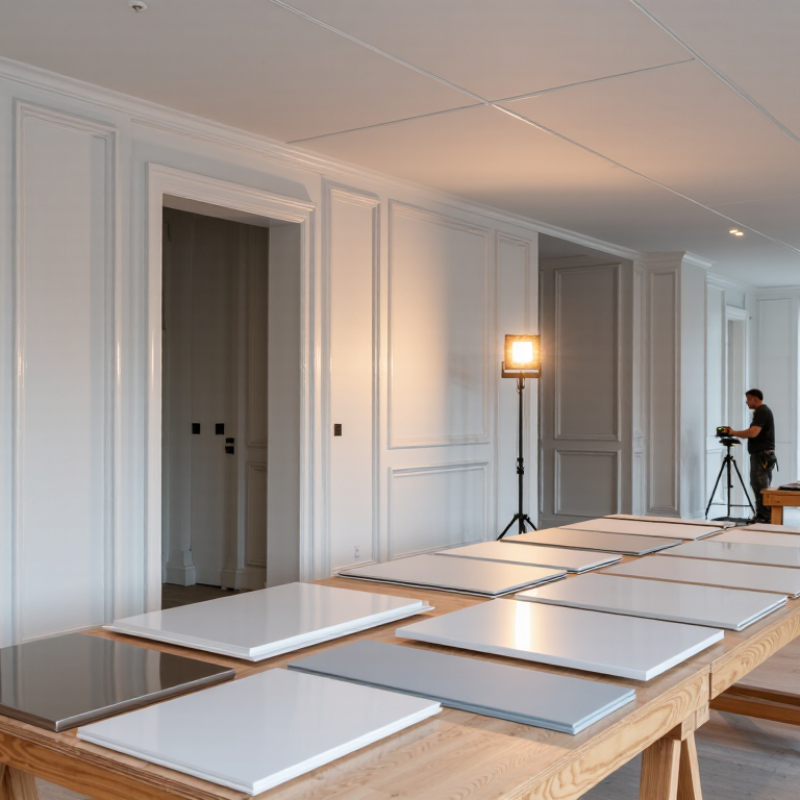
Before sourcing wall mouldings for a global project, define the requirements in measurable terms. Record wall lengths, ceiling heights, corner conditions, and the number of openings. A site drawing with marked elevations prevents costly assumptions. Do not rely on photographs alone; they often hide uneven surfaces and damaged edges.
Specify the moulding profile, width, depth, material, density, and surface finish. Note whether the product will be painted, stained, or installed unfinished. Moisture levels matter in bathrooms, coastal properties, and unconditioned storage areas. Confirm the required fire, safety, and environmental criteria with qualified local professionals. These requirements can vary between project locations. Ask for physical samples, technical data, installation guidance, and test documentation before approving production.
Create a project schedule with sample approval, manufacturing, packing, shipping, and installation dates. Include acceptable dimensional tolerances, color variation, joint visibility, and replacement quantities. Global shipments need strong corner protection and clear carton labels. Early estimates are often wrong. I once underestimated waste around irregular corners, and the installation team had to reorder material. That mistake changed the specification process. Allow extra mouldings for cuts, damage, and future repairs. Also identify who approves drawings and who checks quality at delivery. Clear responsibility reduces delays, but it does not replace a final site inspection.
Compare Materials, Profiles, and Manufacturing Methods
For global projects in 2026, compare wall mouldings by material, profile, and manufacturing method—not appearance alone.
Solid wood suits traditional rooms and accepts sanding, but humidity changes can cause movement. MDF offers consistent dimensions and crisp, repeatable profiles; specify moisture-resistant grades where handling or site conditions warrant them. Polymer mouldings resist moisture, though thermal movement and surface finish need review.
Small sample first.
The World Green Building Council’s Bringing Embodied Carbon Upfront report attributes about 11% of global energy-related carbon emissions to building materials and construction. That figure covers the wider sector, not mouldings, but it supports asking suppliers for product-specific environmental data. Compare verified environmental product declarations where available, and check whether stated figures cover raw materials, factory energy, transport, and installation.
A low-weight profile is not automatically the lower-impact choice.
Manufacturing affects both detail and delivery.
Knife-cut or machined wood can achieve sharp edges, while MDF routing supports consistent runs and custom shapes. Extrusion is suited to repeatable polymer profiles; tooling may make one-off designs costly. Request cross-sections, finish samples, tolerances, and packaging details before approving production. Check how joints meet at an outside corner.
It matters.
A useful comparison also records lead time, repair options, and local finishing requirements; these are often overlooked, even by experienced teams.
The trade-off is rarely neat.
Evaluate Global Suppliers and Quality Standards
For global wall moulding projects in 2026, supplier evaluation should begin with evidence, not attractive catalogues. Request factory addresses, production capacity, process maps, and recent batch records. The ISO Survey of Certifications 2023 reported about 1.26 million ISO 9001 certificates worldwide. Certification helps, but it does not replace an audit. Ask whether the certificate covers the actual moulding facility. A trading office may hold the paperwork instead. Samples reveal more.
Compare suppliers using one test plan. Check profile dimensions, density, moisture content, surface hardness, adhesion, and colour variation. For fire performance, specify the destination market and its required classification. EN 13501-1 and ASTM E84 are not interchangeable. Request laboratory reports showing the tested product, thickness, substrate, and production date. For indoor projects, require VOC evidence under applicable regional methods. ISO 14025 environmental product declarations can support carbon comparisons, but only when system boundaries match. Paper is not performance.
Sustainability needs measurable sourcing decisions. UNEP’s 2023 Global Status Report states that buildings and construction created 37% of global energy-related emissions in 2022. Lightweight mouldings can reduce transport impacts, yet fragile packaging may increase replacement waste. Compare recycled content, packaging weight, pallet utilisation, and defect rates. Require lot traceability from raw material source to carton label. Include pre-shipment inspection, retained samples, and a correction procedure. A practical weakness remains: many reports describe ideal production, not seasonal variation. Re-test after humidity exposure and during the first container order. Reliable sourcing is built through repeatable checks, not one impressive factory visit.
Plan Pricing, Shipping, Customs, and Installation
Sourcing wall mouldings for a global project in 2026 requires more than comparing unit prices.
Ask for a landed-cost quotation, not a factory price. It should separate moulding, tooling, protective packaging, inland transport, freight, insurance, duties, and local tax. Confirm the currency and payment milestones in writing. A low price can hide costly crating or minimum-order rules. Request a physical sample and a finish board. Check weight, profile dimensions, moisture resistance, and color consistency under site lighting. Keep one approved sample with the contract.
Shipping plans need practical detail.
Measure cartons, not only moulding lengths. Measure twice. Long profiles may need reinforced corners and vertical stacking limits. Ask for estimated transit time, port handling charges, and damage procedures. Customs documents should match the shipment exactly. Prepare a commercial invoice, packing list, origin details, correct tariff classification, and any required safety or fire-performance documents. Requirements vary by destination. Use a licensed customs professional when classification is unclear. I have seen schedules slip because one document used a different product description. Small errors become expensive.
Installation should be priced before ordering.
Include substrate repair, cutting waste, adhesives, fasteners, lifts, access equipment, and skilled labor. Store the mouldings flat in a dry room, then allow acclimatization according to the material instructions. Test a two-metre section before full installation. Check corners, joints, shadow lines, and paint adhesion. Leave movement gaps where temperature changes demand them. Site conditions rarely match drawings perfectly. Reconfirm measurements after drywall, flooring, and electrical work are complete. No estimate is perfect. Keep records. A modest contingency for waste and rework is sensible, but document it clearly.
Verify Samples, Production, and Delivery Readiness
A wall moulding sample can look convincing under showroom lights and still fail on site. Check it in daylight, then compare its profile, finish, and dimensions with the approved drawing. Measure several pieces, not just one. Small variations become obvious across a long corridor. Ask for the material specification, dimensional tolerances, and a written record of any approved changes. Keep one signed sample as the reference for production.
Production readiness needs evidence, not reassurance. Request current photos of the tooling, work area, and packed goods, with dates attached. Confirm the order quantity, inspection points, and how defects will be handled before the run begins. A simple trial installation can reveal uneven corners or difficult joints. It is easy to skip this step when schedules tighten. That may be a mistake. For large projects, check whether replacement pieces can be made from the same profile and finish.
Delivery readiness is more than a promised ship date. Ask for the packing method, carton dimensions, piece counts, and a realistic dispatch window. Long mouldings need rigid protection at the ends; otherwise, a small impact can damage an entire length. Confirm who will check labels and quantities before loading. Build time for transit changes and site receiving into the schedule. I have seen plans rely too heavily on an estimated arrival date. It is worth admitting that forecasts can shift, so agree on updates and a practical backup plan early.