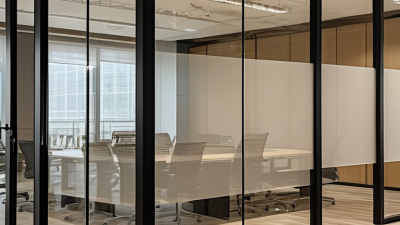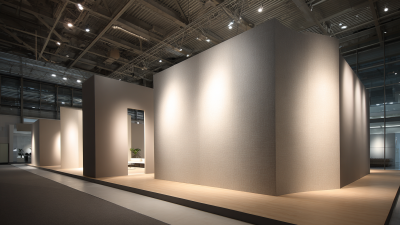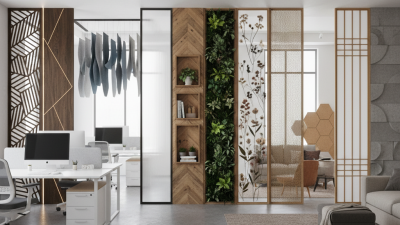
Partition panels help shape how people work, meet, and move through a building. They can create private offices, quiet meeting rooms, or flexible areas without permanent walls. In China, manufacturers and suppliers offer systems in glass, aluminum, steel, and engineered board. The options differ in appearance, installation method, acoustic performance, and maintenance needs. A slim framed glass panel may keep daylight flowing across a small office. A solid panel can provide more visual privacy, though it may make the room feel enclosed. Small details matter. Door seals, joints, and hardware can affect everyday use as much as the panel itself.
Architect Ludwig Mies van der Rohe wrote, “Architecture is the will of an epoch translated into space.” His words offer a useful lens for choosing partition panels: the product should serve the people and tasks inside the room. This guide introduces leading Chinese manufacturers and suppliers, while outlining practical points for comparing their products. Buyers can review material specifications, acoustic test data, customization options, lead times, and installation support. Ask for current documents and project references, rather than relying on a polished catalogue alone. A good-looking sample is helpful, but it cannot reveal every on-site challenge. I would also question whether maximum sound reduction is always necessary; sometimes flexibility, easy cleaning, or natural light matters more. The right choice depends on the room, the budget, and the people who will use it.
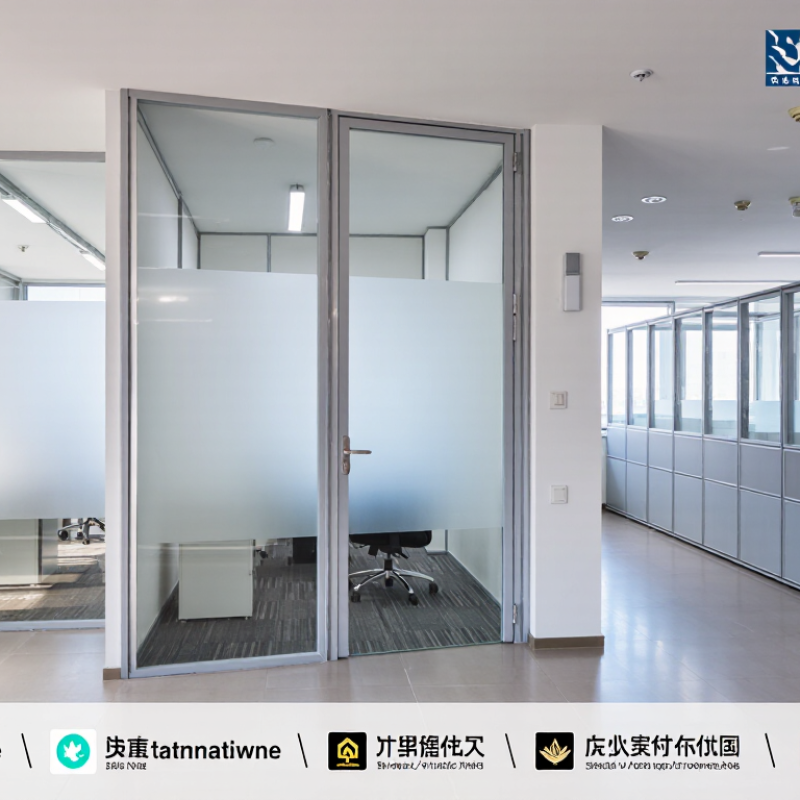
Partition panels are engineered wall assemblies, not just boards fixed to a frame. A typical system combines face sheets, a core, perimeter framing, tracks, and connection hardware. Depending on the design, it may also include insulation, service cavities, and seals. Together, these parts manage room division, privacy, acoustic control, and the routing of cables or pipes. A small gap at a floor joint can undermine sound performance, so panel details matter.
Modular wall systems use repeatable panel sizes and demountable connections to support faster changes to a floor plan. McKinsey’s 2019 report, Modular construction: From projects to products, says modular construction can shorten project schedules by 20–50%. That estimate covers modular construction broadly, not partition panels alone. Still, it shows why designers consider off-site preparation and coordinated installation. Panels must match site dimensions, door openings, and service locations; otherwise, modularity can become rework.
Tips: Confirm panel thickness, core type, fire and acoustic test data, and connection details before ordering. Check how panels meet ceilings, floors, and existing walls. Photograph concealed services before closing the assembly. One point is easy to overlook: future access should be planned, not assumed.
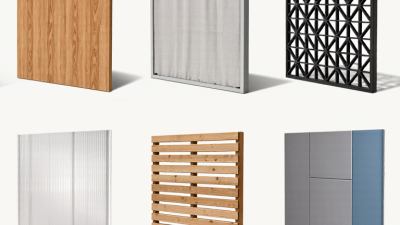
China’s partition-panel market spans gypsum, glass, metal, and high-pressure laminate (HPL), each suited to different room conditions. Gypsum panels are easy to cut on site and help create quiet offices when paired with insulation and sealed joints. Yet they can dent, and moisture resistance depends on the board grade and detailing. The World Green Building Council’s 2019 report estimates that buildings and construction account for 39% of global energy-related carbon emissions. That figure covers entire buildings, not partitions, but it makes material reuse and service life worth checking.
Glass panels bring daylight into meeting rooms and corridors. Specify laminated or tempered glass, then check acoustic ratings, edge protection, and privacy options. Clear glass looks open. It also exposes every cable and cluttered shelf. Metal panels, often steel or aluminum, can offer durable surfaces and removable access for services; compare coating quality, corrosion resistance, and recycled content rather than judging by appearance alone. HPL-faced panels suit busy schools, clinics, and offices because the surface resists everyday scuffs and is simple to wipe. The core still matters: moisture, impact, and fire performance vary by construction.
For Chinese projects, request test reports that match the proposed panel build-up, not just a generic material certificate. Ask suppliers for thickness tolerances, acoustic test conditions, edge details, and installation guidance. A sample feels useful, but it cannot reveal how a partition will perform after years of knocks. Check that too.
| Panel Type | Typical Construction | Common Thickness References | Key Characteristics | Typical Applications | Specification Checks |
|---|---|---|---|---|---|
| Gypsum | Gypsum boards fixed to a metal or timber stud framework; joints are finished after installation. | Boards are commonly available in thicknesses such as 9.5 mm, 12.5 mm, and 15 mm. Finished wall thickness depends on the framing, board layers, and assembly design. | Provides a smooth finish for painting or decoration and is easy to cut and install. Acoustic and fire performance depend on the complete tested wall assembly, including board layers, framing, insulation, and joints. | Interior office partitions, residential room divisions, and other dry interior spaces. | Confirm board type, number of layers, stud size, insulation, moisture exposure, and required tested fire or acoustic rating. |
| Glass | Clear, frosted, tinted, or patterned glass fitted in a framed or frameless partition system. | Single glass panels commonly use 10 mm or 12 mm toughened glass; laminated and double-glazed systems have different build-ups and overall thicknesses. | Allows daylight and visual openness. Toughened or laminated safety glass should be selected as required by the application. Privacy and sound reduction depend on the glass build-up, seals, and installation details. | Offices, meeting rooms, reception areas, and internal glazed screens. | Check safety-glazing requirements, glass type, edge treatment, hardware, acoustic targets, and whether visual privacy is needed. |
| Metal | Metal-faced panels or sheet-metal partitions; some systems use a core such as mineral wool, foam, or a honeycomb structure. | Panel thickness and overall system depth vary by facing, core, support framework, and intended use; there is no single standard thickness for all metal partitions. | Can provide a durable, cleanable surface. Weight, acoustic performance, thermal behavior, and fire performance depend on the metal type and the full panel construction, especially its core and joints. | Commercial and industrial interiors, service areas, technical spaces, and locations needing robust surfaces. | Confirm facing material, core type, corrosion protection, panel joints, fixing method, and documented fire or acoustic performance where required. |
| HPL (High-Pressure Laminate) | Decorative HPL bonded to a substrate, or solid compact laminate used as a self-supporting panel. | Compact laminate toilet-partition panels are often around 12 mm thick; other thicknesses and HPL-faced substrate constructions are also available. | Offers a hard, decorative surface with good resistance to everyday wear. Compact laminate is commonly selected for wet-area cubicles; moisture resistance and edge behavior depend on the specific panel construction. | Toilet cubicles, locker-room partitions, changing areas, and interior fit-outs. | Distinguish compact laminate from HPL-faced board, and check moisture suitability, edge details, hardware, cleaning requirements, and panel thickness. |
Thicknesses and performance vary by product and system. Confirm current product documentation and project-specific requirements before selection.
China’s top partition panel manufacturers and suppliers should be compared by tested system performance, not panel thickness alone. An STC rating of 45–50 can help reduce speech noise between offices or meeting rooms. STC measures airborne sound transmission under laboratory conditions. It does not promise silence. A nearby copier may still be audible through a door gap or ceiling plenum.
Fire ratings of 60–120 minutes indicate how long a tested assembly resists fire under specified test conditions. The rating belongs to the complete wall system, including panels, joints, framing, and penetrations. Small changes matter. An unsealed cable opening or mismatched door can weaken the intended performance. Ask suppliers for test reports that match the proposed configuration, and confirm installation details before ordering. It is easy to over-focus on headline numbers; site workmanship deserves equal attention.
Tips: Check whether STC and fire results apply to the exact assembly you plan to install. Review joint, door, and service-opening details. Ask how field inspections will verify them. If test conditions are unclear, pause and ask for clarification. That extra step is worthwhile.
China’s partition panel manufacturers and suppliers serve projects ranging from compact offices to hotels and commercial interiors. Their work often begins with material selection, panel dimensions, surface finishes, and the way each partition meets floors, ceilings, and door frames. A small measurement error can complicate installation. That detail deserves attention early.
Production capabilities vary. Some factories focus on standard modular panels, while others adapt layouts, colors, glazing, hardware, or acoustic features to project drawings. Buyers can request samples and review technical specifications before approving an order. Check panel thickness, edge treatment, connection methods, and cleaning requirements. A polished sample is useful, but it cannot show every installation condition. Drawings still need careful review.
Suppliers also support export work through packing plans, shipping coordination, and product documentation. Export requirements differ by destination and project, so specifications should be confirmed with the supplier and relevant local professionals. Clear labels and protective packaging help reduce confusion when panels arrive at a busy site. Wooden crates, corner guards, and numbered components can make handling easier. Not every supplier offers the same service depth. Ask who checks dimensions, how changes are recorded, and what happens when a component arrives damaged. Even a well-run process can leave questions unanswered.
China Top Partition Panels Manufacturers and Suppliers
When comparing China-based partition panel manufacturers and suppliers, verify documents against the exact product you plan to buy. GB 8624 classifications describe reaction-to-fire performance, but the report should match the panel’s core, facing, thickness, and construction. Request the complete report, test method, sample description, laboratory details, and issue date—not just a certificate image. Small differences matter. A changed finish or core can make an older result less relevant. ISO 9001 covers a quality-management system; it does not certify every panel’s fire performance or installation. Check the certificate’s validity and scope, then compare its stated processes with the supplier’s production and inspection records.
Tips: Ask for an assembly test report showing the tested panel arrangement, connectors, dimensions, and relevant stability or load results. Confirm that the configuration resembles your project, including door openings or corner joints where applicable. Review a physical sample too. Paperwork can be thorough, yet small fit issues may appear only during assembly.
Keep a written record of document versions and product specifications before ordering. If a supplier cannot explain a mismatch between a report and the quoted panel, pause and request clarification. This check takes time, and it is easy to overlook details when schedules are tight.