Global construction is entering a more demanding phase. Buyers now evaluate wall system suppliers through energy performance, installation speed, durability, and documented compliance. A low price alone is no longer persuasive.
The International Energy Agency reports that buildings account for about 30% of global final energy consumption. The 2023 Global Status Report for Buildings and Construction also identifies buildings as responsible for roughly 37% of global energy-related and process emissions. These figures place wall assemblies under greater scrutiny. Insulation, thermal bridging, moisture control, fire resistance, and recyclability can influence a project’s long-term performance.
Building-science expert Joseph Lstiburek has repeatedly stressed, “A wall is a system, not a collection of materials.” That principle matters when comparing suppliers across regions. A panel may look efficient in a factory photograph, yet perform poorly if joints leak, fasteners corrode, or local installers lack training.
This guide reviews leading wall system suppliers serving international buyers. It considers product engineering, testing evidence, manufacturing capacity, technical support, customization, and supply-chain reliability. The World Green Building Trends report from Dodge Construction Network also shows continued growth in green building activity, although market expectations vary by country and project type.
No supplier is ideal.
Some excel in insulated panels. Others specialize in curtain wall, rainscreen, modular, or structural systems. Buyers should verify project references, third-party certifications, warranty terms, and regional code compatibility before signing contracts. The strongest choice is not always the largest manufacturer. It is the supplier whose wall system fits the building, climate, budget, and installation reality.
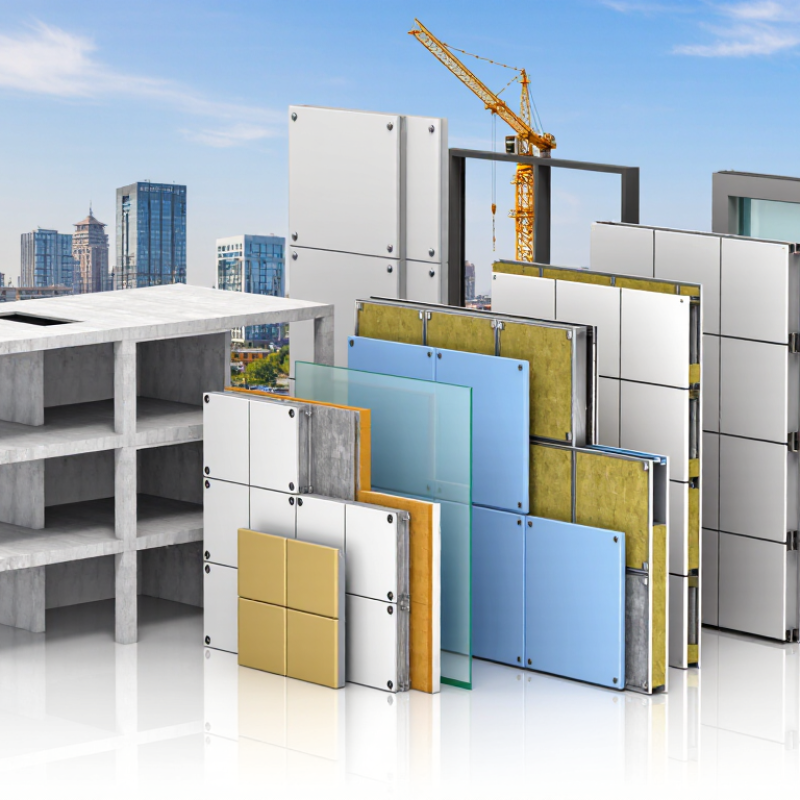
Wall system suppliers provide engineered assemblies that separate, protect, or divide buildings. A wall system is more than a panel; it may include framing, insulation, membranes, fasteners, joints, and finishes. Common types include curtain walls, rainscreen façades, insulated metal panels, precast concrete walls, and interior partition systems. Their performance depends on climate, fire requirements, acoustic targets, installation skills, and maintenance access.
The global market is broad because suppliers serve residential, commercial, industrial, and infrastructure projects. The International Energy Agency reports that buildings consume roughly 30% of global final energy. This makes thermal insulation and airtight detailing important purchasing criteria, not decorative upgrades. The United Nations Environment Programme also reports that buildings and construction remain responsible for about 37% of global energy-related and process emissions. Therefore, buyers should review verified thermal values, environmental product declarations, recycled content, and service-life evidence.
Specifications can mislead. A system may perform well in a laboratory but fail when joints are poorly installed. Suppliers should provide tested assemblies, local code documentation, installation training, and clear warranty conditions. The market is not perfectly standardized. Terms such as “modular wall” or “high-performance façade” can describe very different products across regions. Comparing whole-system performance is wiser than comparing panel prices alone. A practical evaluation should include delivery distance, replacement parts, moisture control, and the supplier’s record on completed projects. Data from marketsandmarkets-style reports can indicate growth, but forecasts vary widely by definition and region. Buyers still need independent technical review.
Choosing an international wall system supplier requires more than comparing catalog prices. Start with verified technical evidence. Request structural drawings, thermal values, acoustic ratings, fire-test reports, and installation tolerances. Documents should identify testing methods, dates, and applicable standards. A supplier that answers clearly earns confidence. Vague claims deserve a pause.
Review manufacturing capacity through factory records, quality-control checkpoints, and recent project references in comparable climates. Ask how panels are protected during loading, sea transit, customs clearance, and site storage. A reliable supplier explains batch tracking, replacement procedures, and response times. Examine a physical sample, not only digital renderings. Check joint seals, coating consistency, fasteners, and edge protection. Small details matter.
Commercial terms need equal scrutiny. Compare lead times, payment milestones, warranty language, spare-part access, and technical support across time zones. Confirm who approves design changes and who bears rework costs. Ask for references you can contact directly. One honest caution: even a capable supplier may struggle with an unfamiliar local code or climate. Project schedules can fail when standard details meet unusual humidity or wind exposure. Leave room for independent engineering review. That is not distrust. It is disciplined procurement.
Top Wall System Suppliers Worldwide for Global Buyers
Leading wall system suppliers differ sharply by region and product specialization. In North America, buyers often seek engineered rainscreens, insulated metal panels, and tested fire-rated assemblies. European suppliers commonly emphasize ventilated façades, recycled materials, and thermal performance. Across East Asia, high-volume producers frequently specialize in curtain walls, prefabricated panels, and rapid factory production. Regional capacity matters. So does documentation.
The International Energy Agency reports that buildings consume about 30% of global final energy and create roughly 26% of energy-related emissions. This increases demand for insulated wall systems, airtight interfaces, and durable solar-control solutions. The 2023 UNEP Global Status Report places buildings and construction at approximately 37% of global energy-related and process CO2 emissions. These figures make performance claims worth checking carefully. A low U-value alone does not prove a reliable envelope.
In practical sourcing, global buyers should compare tested fire resistance, water penetration, wind pressure, corrosion exposure, and replacement access. Suppliers specializing in precast concrete may suit heavy-duty projects, while those focused on lightweight composites can reduce structural loads and installation time. Cold-climate producers may offer stronger thermal assemblies, but their details can require adaptation in humid regions. A neat regional map can mislead. Local codes, labor skills, and shipping damage still affect results. Procurement teams should request full test reports, sample joints, warranty limits, and installation records before approving a supplier. Mistakes happen. The overlooked joint often costs more than the panel.
| Region | Supplier Segment | Primary Wall System Specialization | Typical Applications | Main Material Configuration | Common Performance Requirements | Common Compliance References | Typical Project Scale |
|---|---|---|---|---|---|---|---|
| Western & Northern Europe | Factory-produced façade and envelope system suppliers | Insulated panels Rainscreen façades Precast wall panels | Industrial buildings, logistics centres, offices, residential renovation and energy-efficiency upgrades | Mineral wool or PIR insulation combined with profiled metal sheets, fibre-cement boards, brick slips or precast concrete | Thermal insulation, fire classification, moisture control, wind resistance and airtightness | EN 13501-1, EN 14509, EN 13162, EN 1991-1-4 and national building regulations | Medium to large commercial and infrastructure projects |
| North America | Commercial building-envelope and prefabricated wall system suppliers | Metal composite panels Insulated metal panels Curtain wall assemblies | Warehouses, data centres, healthcare facilities, retail buildings and high-rise commercial construction | Steel or aluminium skins with mineral wool, polyisocyanurate or expanded polystyrene cores; glazed or opaque façade modules | Structural loading, fire resistance, air leakage, water penetration, thermal transmittance and impact resistance | IBC, NFPA 285, ASTM E283, ASTM E331, ASTM E119 and ASCE 7 | Commercial, institutional and large industrial projects |
| East Asia | High-volume panel, façade and modular construction manufacturers | Aluminium façades Precast concrete Light-gauge steel walls | High-rise residential buildings, transport facilities, factories, commercial towers and modular buildings | Aluminium sheets, precast reinforced concrete, galvanized steel framing, cement boards and mineral or polymer insulation | Seismic performance, wind pressure, corrosion resistance, fire safety and factory dimensional control | ISO 9001, ISO 14001, local fire codes, local seismic codes and project-specific ASTM or EN testing | Large-scale residential, infrastructure and industrial developments |
| South Asia | Cost-competitive façade, blockwork and sandwich-panel suppliers | AAC blocks Fibre-cement walls Insulated sandwich panels | Residential developments, schools, warehouses, cold-storage facilities and low- to mid-rise commercial buildings | Autoclaved aerated concrete, cement boards, galvanized steel skins, polyurethane or mineral wool insulation | Compressive strength, dimensional accuracy, thermal performance, moisture resistance and fire behaviour | ASTM C1386, ASTM C90, ASTM C1186, ISO 6946 and applicable national building standards | Small to large residential, commercial and industrial projects |
| Middle East | Heat-resistant envelope and façade system suppliers | Precast façades Metal cladding External insulation systems | Hotels, airports, hospitals, mixed-use developments, warehouses and energy-intensive buildings | Precast concrete, aluminium or coated steel cladding, mineral wool insulation and cementitious render systems | Solar heat control, thermal insulation, dust resistance, fire safety, wind loading and water tightness | ASTM E90, ASTM E283, ASTM E331, EN 13501-1 and local civil-defence requirements | Large commercial, hospitality and infrastructure projects |
| Southeast Asia | Moisture-resistant façade and lightweight partition system suppliers | Fibre-cement façades Aluminium cladding Lightweight partitions | Residential towers, shopping centres, factories, hotels and tropical-climate commercial buildings | Fibre-cement boards, aluminium panels, galvanized steel framing, cement-based boards and moisture-resistant gypsum products | Rain-screen drainage, humidity resistance, corrosion protection, mould resistance and wind-driven rain performance | ASTM C1186, ASTM E331, ISO 9227, EN 13501-1 and local tropical-climate building codes | Medium to large residential, commercial and industrial projects |
| Oceania | Lightweight framing and high-wind envelope system suppliers | Cold-formed steel walls Fibre-cement cladding Insulated panels | Detached housing, apartment buildings, education facilities, agricultural buildings and coastal construction | Cold-formed galvanized steel, fibre-cement sheets, timber-compatible membranes and insulated metal or composite panels | Wind resistance, bushfire performance, condensation management, corrosion resistance and energy efficiency | AS/NZS 1170, AS 1530.1, AS 5113, AS/NZS 4200.1 and the National Construction Code | Residential, agricultural and medium-sized commercial projects |
| Latin America | Precast, masonry and economical industrial wall system suppliers | Precast concrete Concrete masonry Insulated roofing and wall panels | Housing, retail facilities, factories, distribution centres and agricultural buildings | Reinforced precast concrete, concrete blocks, galvanized steel sheets, expanded polystyrene or mineral wool cores | Structural strength, seismic or wind resistance, thermal comfort, fire performance and installation productivity | ASTM C90, ASTM C129, ACI 318, ISO 6946 and applicable national construction standards | Residential, industrial and infrastructure projects of varied scale |
| Sub-Saharan Africa | Durable masonry, precast and modular wall system suppliers | Concrete blocks Precast panels Modular steel systems | Housing programmes, schools, healthcare buildings, warehouses and mining-related facilities | Concrete masonry units, reinforced precast concrete, galvanized steel frames, cement boards and locally available aggregates | Durability, heat control, water resistance, ease of maintenance, fire safety and supply-chain availability | ASTM C90, EN 206, ISO 6946, ISO 9001 and applicable national building regulations | Public-sector, residential and industrial projects |
Top Wall System Suppliers Worldwide for Global Buyers
Materials, Technologies, and Services Offered by Global Suppliers
Global wall system suppliers provide more than panels and framing. Their portfolios often include concrete, steel, timber, glass, fiber cement, and insulated composite materials. Each option serves different structural, thermal, acoustic, and moisture-control requirements.
Experienced suppliers usually provide tested assemblies, installation manuals, shop drawings, and project-specific engineering support. Some offer BIM files, factory cutting, sample panels, and site training. These services can reduce installation errors, especially when crews work across different languages and construction standards. Reliable suppliers also explain lead times, packaging methods, replacement procedures, and warranty limits before contracts are signed.
Technology choices vary by climate and building type. High-performance insulation can reduce heat transfer, while ventilated façades help manage rain and trapped moisture. Fire-rated systems require verified test reports, not attractive claims. Digital configuration tools can improve accuracy, but they cannot replace a qualified local review. That part is sometimes underestimated.
Global buyers should compare test evidence, manufacturing capacity, quality-control records, and after-sales response. A low price may hide complex shipping, unavailable spare parts, or difficult repairs. No supplier gets every detail right. Even a carefully specified wall can fail when joints are poorly sealed or site conditions change. Asking for reference projects, inspection procedures, and realistic maintenance guidance creates a more dependable purchasing decision.
Representative thermal conductivity of insulation materials commonly offered in wall systems
Lower thermal conductivity indicates better insulation performance at the same thickness. Values are representative ranges commonly reported for dry materials at approximately 10°C; actual performance varies by density, moisture, temperature, and product specification.
Global buyers should evaluate wall system suppliers through evidence, not polished catalogs. Experienced procurement teams request full technical data, installation manuals, test reports, and recent project references. A factory tour or live video inspection can reveal storage conditions, quality controls, and production capacity. Small details matter, such as panel flatness, coating consistency, joint design, and packaging strength.
Cost is only one comparison point. Buyers should review thermal performance, acoustic ratings, fire test documentation, moisture resistance, lead times, and replacement support. Clear communication also matters across time zones. Ask who approves drawings, who handles changes, and how defects are recorded. A supplier may offer a low initial price but create extra site labor later. That risk is often missed. I have seen projects delayed by unclear interface dimensions, even when the wall panels themselves were acceptable.
Tips: Build a comparison sheet with measurable criteria. Request one physical sample and a small mock-up before ordering. Check whether quoted delivery dates include production, inspection, export packing, and inland transport. Keep written records of every revision. A video meeting helps, but it cannot replace physical inspection. Also, leave room for uncertainty. Weather, port congestion, and local installation skills can change the original plan. Good suppliers discuss these weaknesses openly instead of promising perfection.