Global buyers are entering 2026 with broader choices in plastic panels, but selection is becoming less straightforward. Temperature, impact, fire performance, hygiene, and recycling access can change the right specification. A warehouse roof in Dubai does not need the same panel as a food-processing wall in Germany.
Industry data shows why this market deserves careful attention. Grand View Research estimates that the global plastics market reached approximately USD 712.6 billion in 2023, with continued growth expected through 2030. The OECD’s Global Plastics Outlook reports that annual plastic waste more than doubled from 2000 to 2019, while only about 9% was recycled. These figures place material efficiency and end-of-life planning beside price and performance.
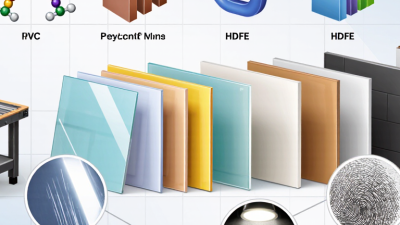
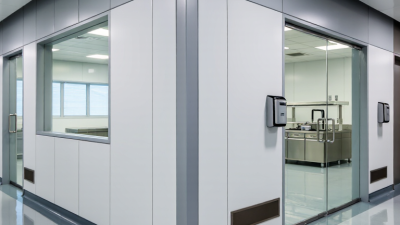
This guide compares leading plastic panels for international purchasing. PVC panels remain practical for interior cladding, cleanrooms, and moisture-prone areas. HDPE panels offer strong chemical resistance and impact tolerance. Polypropylene performs well where low density and chemical exposure matter. Polycarbonate panels provide high impact strength, while acrylic panels deliver clearer appearance and better light transmission. Fiberglass-reinforced plastic panels suit demanding industrial walls and ceilings.
No single panel wins everywhere. That sounds obvious, yet purchasing teams still overvalue unit price. A cheaper sheet may warp under sunlight, crack during transport, or require frequent replacement. Buyers should verify technical datasheets, test standards, warranty terms, recycled content, and local installation skills. Supplier claims also deserve scrutiny. This is not a perfect checklist, but it creates a more reliable starting point for comparing plastic panels in 2026.
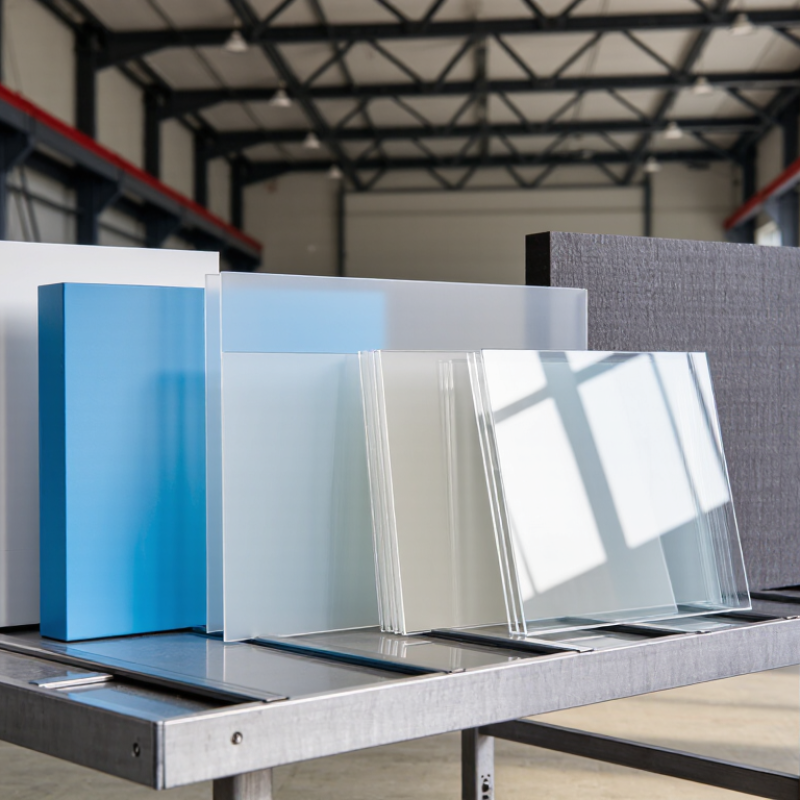
Global buyers increasingly classify plastic panels by resin, not appearance alone. Each polymer responds differently to moisture, heat, chemicals, impact, and fabrication. PE panels suit liners, tanks, and wear surfaces where low water absorption matters. PP offers stronger chemical resistance and lighter handling. PVC works well for wall cladding and utility enclosures, although heat exposure can limit its service life. Selection should start with the operating environment, not a catalogue photograph.
PC panels are valued for high impact resistance and light transmission. They fit machine guards, partitions, and protective glazing. PMMA provides clearer optics and better surface gloss, but it can crack under sharp impact. FRP combines a polymer matrix with reinforcing fibers. It serves corrosive areas, platforms, covers, and structural skins. Fiber orientation, resin choice, and laminate thickness change performance substantially. FRP is not one uniform material.
In practice, I compare sample panels under expected load, temperature, cleaning chemicals, and fastener stress. Test it. I also check thickness tolerance, flatness, UV exposure data, fire behavior, and test methods. Supplier certificates help, but independent verification remains wise for critical applications. A panel may pass a laboratory test and still fail after poor edge sealing or over-tightened screws. That detail is easy to miss. Some specifications remain incomplete, especially for recycled content and long-term outdoor aging. Buyers should record assumptions before ordering, then review them after field trials.
2026 Top Types of Plastic Panels for Global Buyers?
Polymer density is a practical starting point when comparing plastic panels. Polyethylene and polypropylene usually sit near 0.90–0.97 g/cm³. PVC is much heavier, commonly ranging from 1.30–1.45 g/cm³. A one-square-metre panel with equal thickness may therefore feel dramatically different during lifting, shipping, and installation.
In real purchasing work, low-density PE and PP panels can reduce handling effort and freight weight. They may suit liners, protective barriers, tanks, and lightweight fabricated parts. PP often provides useful stiffness and heat resistance, while PE can offer strong impact performance and moisture resistance. PVC panels feel denser and more substantial. They can support rigid partitions, cladding, and chemical-handling structures, depending on formulation and reinforcement. Density does not prove quality. That assumption causes trouble. Additives, fillers, thickness tolerance, and processing can change performance. I have seen a lighter panel outperform a heavier one in impact testing, but not in every application.
Tips: Compare weight per square metre, not density alone. Request a technical data sheet and a physical sample. Check thickness, surface finish, operating temperature, and chemical exposure. For outdoor use, ask about weathering tests. Do not rely on a catalog value without verification. A small weighing test can reveal inconsistencies between batches. This step feels basic, yet buyers often skip it.
2026 Top Types of Plastic Panels for Global Buyers?
Performance Benchmarks: ASTM D638 Strength, Izod Impact, and UV Exposure Data
Plastic panel selection should begin with service conditions, not appearance. Common options include HDPE, polypropylene, PVC, ABS, polycarbonate, acrylic, and PETG. ASTM D638 tensile testing shows how a material resists pulling, but results depend on thickness, specimen shape, temperature, and conditioning. A reported strength value without test details is incomplete.
Izod impact data adds a different perspective. Polycarbonate and ABS usually absorb sudden impacts better than acrylic, although grades vary widely. HDPE can perform well in cold environments, while rigid PVC offers useful stiffness. Ask for the notch condition, testing direction, and temperature. Small changes matter. A panel tested at room temperature may behave differently beside a loading dock in winter.
UV exposure requires careful interpretation. ASTM G154 or G155 results can reveal color change, cracking, gloss loss, and strength retention after controlled exposure. Hours in a chamber do not equal a fixed number of outdoor years. Local sunlight, humidity, pollution, and panel orientation change the outcome. In sourcing reviews, I have seen attractive panels fail around fasteners before the surface visibly faded. That detail is easy to miss. Compare original and exposed ASTM D638 results, not only photographs. Require lot-specific reports, conditioning records, and thickness measurements. Some supplier data remains persuasive but imperfect. Independent retesting is sensible for critical installations.
| Plastic Panel Type | Typical Applications | ASTM D638 Tensile Strength (MPa) |
ASTM D638 Tensile Modulus (GPa) |
Izod Impact Strength ASTM D256, Notched (J/m) |
UV Exposure Benchmark ASTM G154, 1,000 h |
Temperature Range for Typical Service (°C) |
Key Buying Considerations |
|---|---|---|---|---|---|---|---|
| Rigid PVC | Wall cladding, clean-room panels, partitions, signage, interior lining | 40–55 | 2.4–3.5 | 20–90 | Usually retains approximately 70–90% of tensile strength when UV-stabilized; outdoor-grade formulations show better color retention. | -15 to 60 | Good chemical resistance and low cost; verify plasticizer-free formulation, impact modifier content, and weatherability for exterior use. |
| HDPE | Industrial liners, tanks, cutting boards, marine components, protective barriers | 20–35 | 0.7–1.5 | 80–250 | UV-stabilized black grades can retain approximately 60–85% of tensile strength after 1,000 h; natural or non-stabilized grades may degrade faster. | -50 to 80 | Excellent moisture and chemical resistance; high thermal expansion and relatively low stiffness should be considered in large panels. |
| PP Copolymer | Automotive trim, equipment guards, packaging panels, laboratory and industrial partitions | 20–35 | 0.9–1.6 | 100–300 | UV-stabilized grades commonly retain approximately 50–80% of tensile strength after 1,000 h; outdoor performance depends strongly on pigments and stabilizers. | -10 to 100 | Low density and strong chemical resistance; copolymer grades generally provide better impact resistance than homopolymer grades. |
| ABS | Machine covers, indoor signage, display panels, appliance housings, fabricated enclosures | 35–55 | 1.7–2.6 | 100–400 | Unprotected ABS may show substantial color and impact loss; UV-stabilized or capped grades typically retain approximately 50–80% of impact strength after 1,000 h. | -20 to 80 | Very good balance of stiffness and impact strength; standard ABS is better suited to indoor applications unless UV protection is specified. |
| Polycarbonate (PC) | Safety glazing, machine guards, transparent barriers, skylight panels, security screens | 55–75 | 2.1–2.5 | 600–950 | UV-capped grades can retain approximately 80–95% of tensile strength and maintain high impact performance after 1,000 h; uncapped grades may yellow or embrittle. | -40 to 115 | Outstanding impact resistance and transparency; specify a co-extruded UV layer for demanding outdoor exposure. |
| Acrylic (PMMA) | Outdoor signs, light diffusers, architectural glazing, display panels, transparent covers | 60–80 | 2.8–3.4 | 15–35 | High-quality outdoor PMMA generally retains approximately 85–95% of tensile strength and shows excellent color stability after 1,000 h. | -30 to 80 | Excellent optical clarity and weatherability; more brittle and less impact-resistant than polycarbonate. |
| PETG | Point-of-sale displays, thermoformed covers, medical and food-contact fabrication, indoor partitions | 45–60 | 1.8–2.3 | 80–180 | Typical unmodified PETG may retain approximately 60–85% of tensile strength after 1,000 h; outdoor grades require dedicated UV stabilizers. | -30 to 70 | Easy to thermoform and fabricate; confirm hydrolysis resistance, food-contact compliance, and outdoor-use formulation. |
| FRP / GFRP Composite Panel | Industrial wall panels, transport interiors, roofing, corrosion-resistant platforms, modular buildings | 80–250 | 8–25 | 40–180 | Gel-coated or UV-protected surfaces commonly retain approximately 70–90% of tensile strength after 1,000 h; surface chalking may occur before structural failure. | -40 to 120 | High stiffness-to-weight ratio and corrosion resistance; compare laminate architecture, glass content, resin type, fire rating, and test direction. |
Plastic panels remain popular with global buyers because they are lightweight, moisture-resistant, and easy to fabricate. Common choices include PVC, polycarbonate, acrylic, HDPE, and fire-retardant composite panels. However, appearance and price should not guide selection alone. Fire behavior can change with thickness, colorants, coatings, adhesives, and installation methods.
EN 13501-1 classifies a panel’s reaction to fire, including flame contribution, smoke production, and flaming droplets. ASTM E84 measures flame spread and smoke-developed values under a specific test setup. These results are not automatically interchangeable. A responsible supplier should provide current test reports, product thickness, mounting conditions, and laboratory details. REACH supports chemical transparency in applicable markets, while RoHS restricts certain hazardous substances in relevant electrical and electronic products. Their scope must be checked carefully. A certificate alone can mislead.
Tips: Request documents for the exact panel grade, not a similar model. Confirm whether the test covers the finished system, including insulation and adhesive. Check batch traceability and retest dates. Ask for a written declaration of restricted substances. Local building rules may demand more than one standard. This is where many purchasing plans become weak. Recheck assumptions before ordering large volumes. Safety performance deserves practical verification, not paperwork alone.
2026 Top Types of Plastic Panels for Global Buyers?
Global buyers often compare PVC, polycarbonate, acrylic, and HDPE panels for walls, partitions, roofing, and machine protection. Each material behaves differently during cutting, drilling, and outdoor use. Polycarbonate offers strong impact resistance, while acrylic provides clearer appearance. PVC can simplify wet-area projects. HDPE suits demanding industrial environments.
Thickness deserves more attention than the catalog number. A “6 mm” panel may arrive at 5.7 or 6.3 mm, depending on production standards. Request the permitted tolerance in writing, such as ±0.2 mm, and confirm where measurements are taken. Ask for a sample from current production. Small differences can affect frames, seals, and installation labor. I have seen buyers approve a sample, then overlook production variation. That mistake is expensive.
MOQ may apply per color, thickness, or container, not only per order. Confirm pallet quantity, packing dimensions, and whether mixed sizes are allowed. Clarify Incoterms before comparing offers. EXW excludes most transport work; FOB adds port delivery, while CIF includes freight but not all destination charges. DDP may look simple, yet import responsibilities need careful verification. For 2026 pricing, request a validity period and a separate breakdown for resin, processing, packing, and freight. Energy and shipping costs can change quickly. A reliable supplier should provide inspection records, technical data, and a clear claim process. A perfect forecast is impossible. Allow a modest contingency for thickness checks, damaged edges, and currency movement.