What Are Waterproof Panels and What Types Are Available?
Waterproof panels offer a practical way to protect walls from splashes, humidity, and routine cleaning. They appear in showers, laundry rooms, kitchens, and commercial wash areas. But the name can suggest more than a panel alone can deliver. Joints, corners, cut edges, and the wall behind the surface still matter.
Building scientist Dr. Joseph Lstiburek’s guidance can be paraphrased as: “Manage water at the surface, and give moisture a way to escape.” This is a summary, not a verified verbatim quotation. It captures an important building-science principle: durable assemblies depend on water control, not just a product label. A neat panel can still fail when seams are poorly sealed or the substrate is unsuitable.
Available options include PVC, acrylic, fiberglass-reinforced panels, and compact laminate. Each differs in appearance, thickness, installation method, and resistance to impact or chemicals. Some cement-based boards are commonly used behind finishes, but they are not automatically waterproof and may need a separate membrane. Check manufacturer instructions and compatibility before installation. Look closely at the corners. Check the seams. A glossy face is not proof of a watertight system. This guide explains what waterproof panels are, how common types compare, and which details deserve attention before purchase. Real rooms are messier than product photos, so even a well-chosen panel needs careful fitting and maintenance.
What Waterproof Panels Are and How They Work
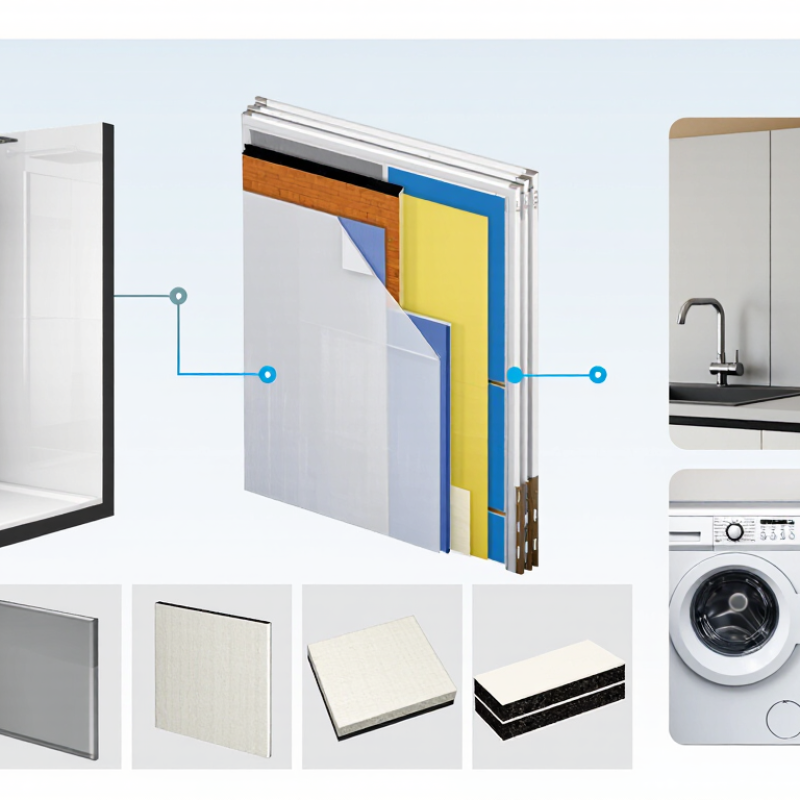
Waterproof panels are building boards or finished sheets designed to limit water passing through walls and ceilings. They may use PVC, fiberglass-reinforced plastic, acrylic, or cement-based cores with a sealed face. The exact construction varies. Some products are waterproof themselves; others resist moisture but still need a waterproof membrane behind them.
The panel is only one part of the system. During installation, panels are fixed to a suitable frame or substrate, then joints, corners, fasteners, and plumbing openings are sealed according to the manufacturer’s instructions.
Water often finds the gaps first. That detail is easy to miss.
A shower wall can look spotless while a small unsealed edge lets water reach the framing. For reliable performance, installers check that the substrate is sound, seams are tight, and sealants are compatible with the panel.
In use, the finished surface sheds splashes and makes routine cleaning easier, but it does not correct poor drainage or hidden leaks. Some panels suit shower enclosures, laundry areas, or utility rooms; others are intended only for occasional splashing. Read the technical data sheet before choosing one, especially for temperature limits, cleaning products, and required joint treatments. A panel may feel solid in the hand, yet its performance depends heavily on careful fitting. I would not assume that “waterproof” means every edge can be left untreated. The wording can be misleading.
Materials and Features That Make Panels Waterproof
Waterproof panels rely on both their material and their joints. A glossy surface alone proves little. Solid PVC and fiberglass-reinforced plastic resist liquid water at the face, while cement board tolerates wet conditions but usually needs a waterproof membrane behind it. Water-resistant gypsum panels have treated cores or facings, yet they are not suitable for permanent water exposure. The distinction matters. Look for clear performance claims and installation instructions, not just the word “waterproof.”
Testing helps explain those claims. ASTM E96/E96M measures water-vapor transmission; ASTM E331 evaluates water penetration through building assemblies under pressure. These results describe different risks: vapor can pass through a panel even when liquid water cannot. The U.S. Environmental Protection Agency’s A Brief Guide to Mold, Moisture and Your Home advises drying wet materials within 24–48 hours to limit mold growth. That short window makes sealed seams, corners, and fastener holes important in showers and utility rooms. A practical check is to inspect cut edges and joints after installation. Small flaw. Even a durable panel can leak when water reaches an unsealed opening, and the product data sheet may not reflect every site condition.
Common Types of Waterproof Panels
Common Types of Waterproof Panels
PVC panels are lightweight, affordable, and simple to wipe clean. Their smooth surfaces suit laundry rooms, utility spaces, and shower walls. Acrylic panels offer a glossy finish and come in larger sheets, which can mean fewer seams. However, scratches may show more clearly on some finishes. Fiberglass-reinforced panels are durable and often used in busy or damp areas. They can look more utilitarian than decorative.
Solid-surface panels create a seamless, stone-like appearance and are easy to maintain, but they tend to cost more and can be heavy to handle. Tile backer panels provide a stable base for tiled walls, yet the board alone may not stop water. The joints, fasteners, and surrounding details need a compatible waterproofing system. Small gaps matter. A neat panel surface cannot make up for poorly sealed corners or pipe openings.
Tips: Check the installation instructions before buying, especially for wet zones. Compare panel thickness, seam design, and cleaning needs. Press gently around sample edges and inspect how joints fit together. One detail is easy to overlook: uneven walls can make even good panels difficult to align.
Where Different Waterproof Panels Are Used
Waterproof panels are most useful where walls face repeated splashes, steam, or routine cleaning. In showers and tub surrounds, smooth PVC panels limit exposed seams and wipe clean with a soft cloth. Fiberglass-reinforced panels are common in laundry rooms, utility areas, and commercial kitchens, where walls may be scrubbed often. They handle moisture well, but scratches and poorly sealed edges can still cause trouble. Small details matter.
In bathrooms, cement board is often used behind tile, but it is not waterproof by itself. It needs a suitable waterproofing layer before tiles are installed. This setup works well where a tiled finish is preferred, though grout and corners require regular attention. Large-format panels can reduce the number of joints in shower walls. Fewer joints can mean fewer places for water to enter, but installation still has to be precise.
For kitchens and washrooms, acrylic or solid-surface panels offer a smooth, easy-to-clean wall finish around sinks and counters. Glass panels can protect walls behind sinks or baths, while also reflecting light in smaller rooms. Match the panel to the area’s heat, cleaning needs, and expected impact. A panel may resist water, yet its seams, fasteners, and cut edges remain vulnerable. Check those details before choosing.
Waterproof Panels: Suitability for Wet Areas
PVC, fiberglass-reinforced plastic (FRP), and acrylic panels are commonly used as finished surfaces in wet areas. Compact laminate is used in some wet-area applications. Cement board is a water-resistant substrate, not a waterproofing layer; it typically requires a suitable waterproof membrane. Ratings are a qualitative guide, not a standardized product rating. Suitability depends on the specific product, installation, and local requirements.
How to Choose a Waterproof Panel for Your Project
Waterproof panels are designed to limit water penetration on walls or ceilings, but the panel alone may not protect a whole assembly.
Seams, corners, fasteners, and pipe openings can still let moisture through. For a shower, laundry room, or utility area, consider how often surfaces get wet and how quickly they dry. A panel suited to occasional splashes may not be right for daily direct spray.
Choose a panel compatible with the project’s substrate and finish. Compare the manufacturer’s installation instructions, permitted wet-area uses, thickness, and joint-sealing requirements. Check whether the system needs a separate membrane, special fasteners, or sealed edges. These details matter around a shower niche or a window, where cuts and corners collect water. Also consider cleaning needs, impact resistance, and whether the panel can be fitted around existing fixtures. It is easy to focus on the panel’s surface and overlook the joints; that is a detail worth checking twice.
Tips: Measure the area carefully, including openings and corners. Ask the supplier or installer to confirm the complete assembly is suitable for your exposure. Keep a small offcut to test how it cuts and finishes. It may not behave as expected.